Core Differences and Application Scenarios of Counterbalanced Cranes and Cantilever Cranes
In industrial production and logistics, crane selection directly impacts operational efficiency and safety. Counterbalanced cranes, cantilever cranes, and the specific lifting scenarios are core elements of lifting operations. Their structural and performance differences determine their adaptability to various lifting scenarios. The following analysis categorizes these differences from core dimensions.
Differences in Structural Design and Force Principles
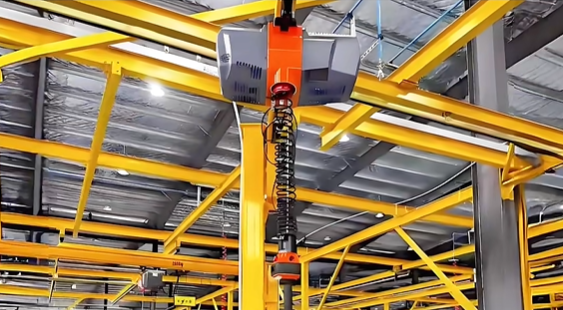
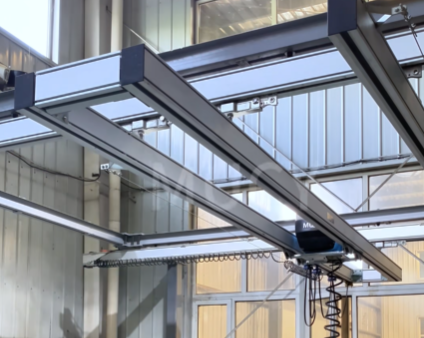
Counterbalanced Cranes: Designed with "balance" as their core principle, they are equipped with precisely proportioned counterweights. The boom and counterweights are positioned on opposite sides of the base, forming a symmetrical force-bearing structure. The counterweights counteract the weight of the load, reducing the load on the drive mechanism. The overall structure is relatively complex and larger in size.
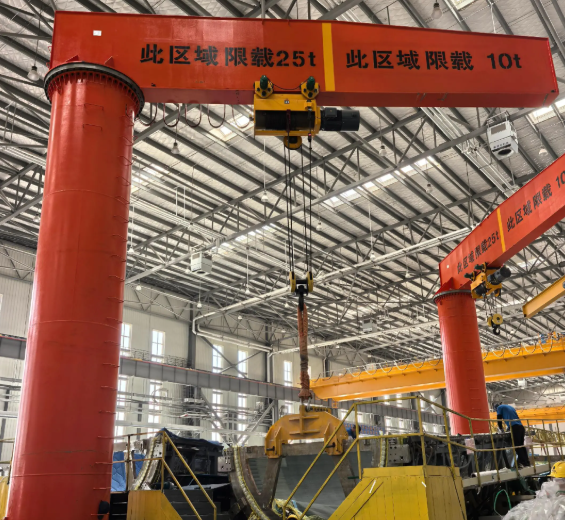
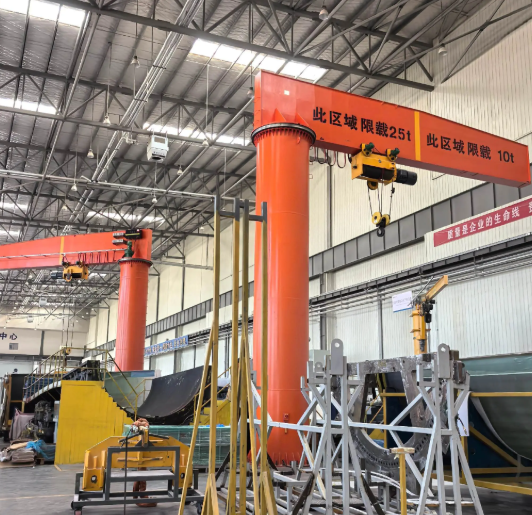
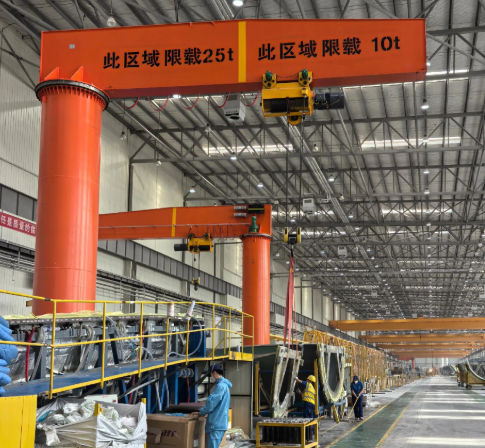
Cantilever Cranes: The core feature is an extendable cantilever structure (single/double cantilever), eliminating the need for counterweights. Gravity is transferred through a rigid connection between the base and the cantilever. The structure is simple, installation and disassembly are convenient, and they are suitable for space-constrained areas.
Core Differences in Operational Performance
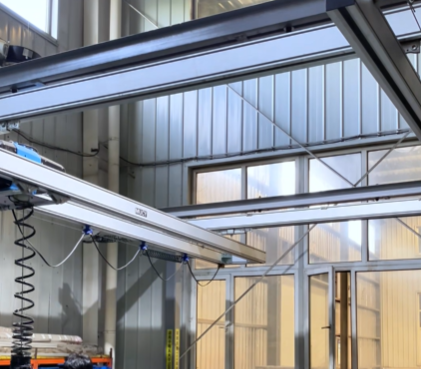
Operating Radius: The operating radius of a counterbalanced crane is relatively fixed; the operating radius of a cantilever crane is flexible and adjustable, rotating around its base for a wider coverage area.
Load Capacity: Counterbalanced cranes are suitable for handling light goods; cantilever cranes have a stronger load capacity and can handle heavy goods.
Operational Stability: Counterbalanced cranes experience balanced force, operate smoothly, and have minimal sway; the stability of cantilever cranes is greatly affected by the length of the cantilever, with longer cantilever cranes exhibiting more pronounced sway.
Differences in Crane Operation Scenarios
Counterbalanced Crane Scenarios: Primarily suited for indoor, light-duty, and precision operations, such as precision parts assembly workshops, electronic component production workshops, medical device assembly workshops, and small-scale processing lines.
Cantilever Crane Scenarios: Suitable for outdoor, heavy-duty, and large-span operations, such as outdoor warehouses and docks, construction sites, large warehousing centers, and large port loading and unloading areas.
Differences in Operational Difficulty and Maintenance Costs
Counterbalanced Cranes: Require less force to operate; operators can be trained quickly. The counterweight and drive mechanism experience even wear, resulting in lower maintenance costs.
Cantilever Cranes: Require more precise operation, needing to control the cantilever extension length and rotation speed. Stress is concentrated at the cantilever-base connection, leading to rapid component wear and the need for regular rigidity checks, resulting in higher maintenance costs.
Core Summary
Counterbalanced cranes offer advantages in "balanced force distribution and stable operation," making them suitable for indoor light-duty precision lifting operations. Cantilever cranes, characterized by "flexible radius and large load capacity," are suitable for outdoor heavy-duty, large-span lifting operations. Actual selection should consider the operating environment, cargo weight, and precision requirements, matching the performance characteristics of both types to maximize efficiency and safety.