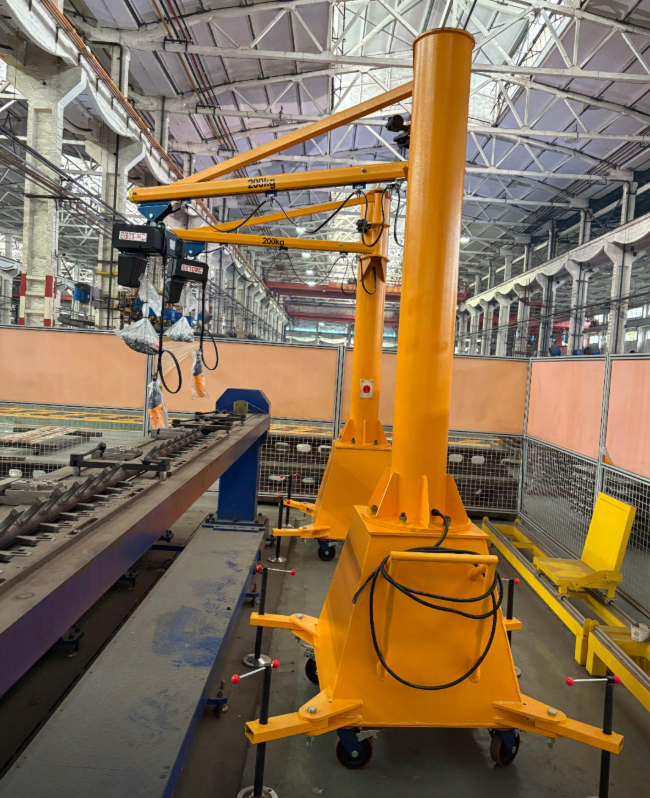
On the Key Safety Devices and Standard Installation Technology of Wheel-Mounted Cantilever Cranes
In modern industrial production, logistics transportation, and construction, cranes are indispensable heavy equipment, and their safe operation is paramount. Among them, wheel-mounted jib cranes, with their unique mobility and flexible working range, have been widely used in various working conditions. This article focuses on the core safety devices of such cranes and the standardized installation techniques that ensure their safe and effective utility.
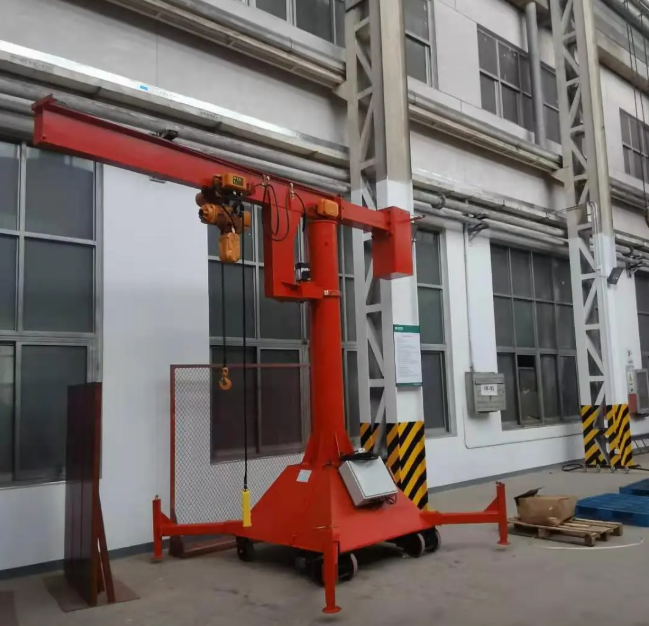
Core Safety Barriers of Wheel-Mounted Cantilever Cranes
The wheel-mounted cantilever crane is an important category within the cantilever crane family. It integrates a mobile chassis with a rotating cantilever structure, preserving the flexibility of a cantilever crane while adding portability. Therefore, the reliability of its safety devices, such as the overload protection device, is vital for protecting personnel and equipment. Key safety devices for the wheel-mounted cantilever crane include:
Overload protection device: This is a fundamental safety barrier for any cantilever crane. When loads exceed rated capacity, the overload protection device automatically cuts power and triggers alarms, preventing structural failure or tipping. For the wheel-mounted cantilever crane, which operates in diverse environments, the overload protection device is indispensable for accident prevention.
Moment limiter: This device monitors load and range in real-time, calculating the working moment to compare with safe limits. It is crucial for all cantilever crane types, including the wheel-mounted cantilever crane, to avoid stability issues.
Travel limit device: It includes hoisting, rotation, and extension limits to ensure moving parts stay within safe ranges. Proper installation of these devices is key for the wheel-mounted cantilever crane.
Windproof and anti-slip devices with braking system: Mobility requires robust braking and windproof features for the wheel-mounted cantilever crane. These complement the overload protection device in ensuring stability.
Emergency stop and safety alarm devices: These allow quick shutdown and alert personnel. In a wheel-mounted cantilever crane, they integrate with systems like the overload protection device for comprehensive safety.
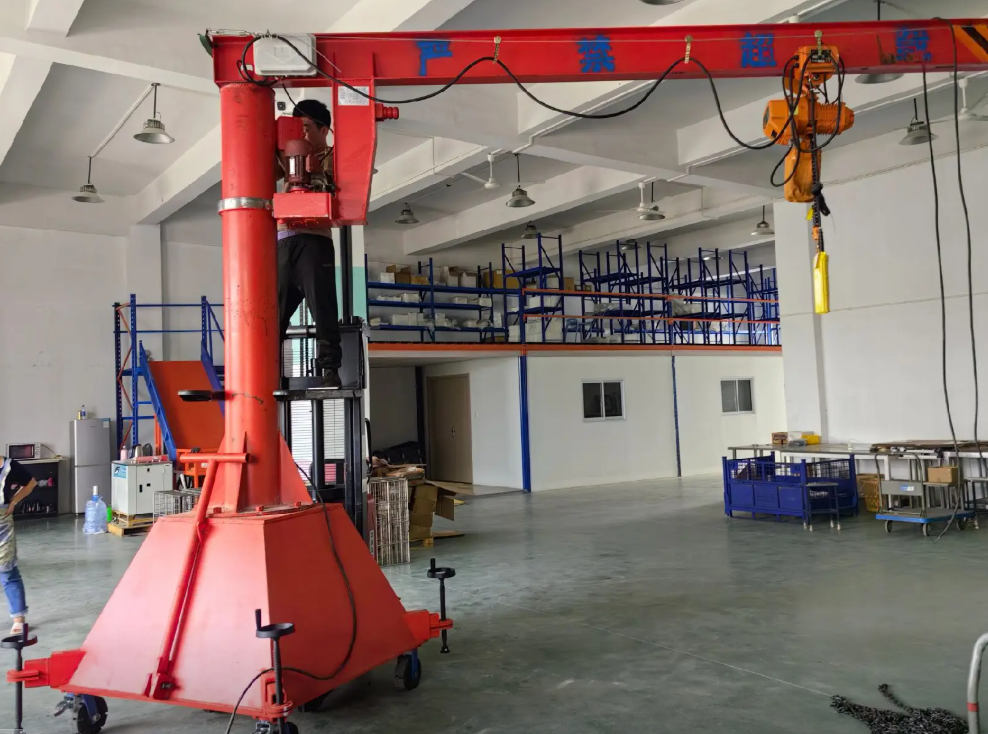
The Foundation of Safety: Standardized Installation Techniques
Even the most advanced safety devices can only function correctly through proper and standardized installation. The installation of wheel-mounted jib cranes must follow strict technical procedures:
Site Survey and Foundation Preparation: Even for mobile equipment, the site for long-term parking or heavy-duty operations needs to be solid and level, with ground bearing capacity meeting requirements. For fixed-base jib cranes, the quality of the concrete foundation and the precision of embedded parts directly determine the stability and safety of the entire machine.
Structural Assembly and Precision Control: During installation, parameters such as the verticality of the column, the levelness of the boom, and the concentricity of the rotation center must be strictly controlled within the design tolerances. Any slight deviation can impose additional stress on the structure during long-term use or full-load operation, accelerating fatigue and affecting the sensing accuracy of safety devices.
Integration and Debugging of Safety Devices: This is the most critical part of the installation process. Every safety device, such as sensors for the overload protection device, detection elements for the moment limiter, and various travel limit switches, must be installed with precise positioning, secure fixation, and correct signal connections. After installation, comprehensive debugging under no-load and load conditions is essential to verify that every limit and each protection function is sensitive, reliable, and effective. For example, overload conditions must be simulated to confirm the overload protection device acts accurately.
Electrical and Hydraulic System Installation: All cables and pipelines should be laid properly to avoid interference with moving parts. Grounding protection must be reliable to prevent electric shock risks. The hydraulic system must have good sealing, no leaks, and pressure settings must comply with specifications.
Final Inspection and Acceptance: After all installation work is completed, a comprehensive inspection should be carried out by professional technical personnel according to relevant national safety regulations and the manufacturer's standards. This includes static and dynamic load tests to confirm that the overall machine performance and all safety functions meet standards before it can be officially put into use.
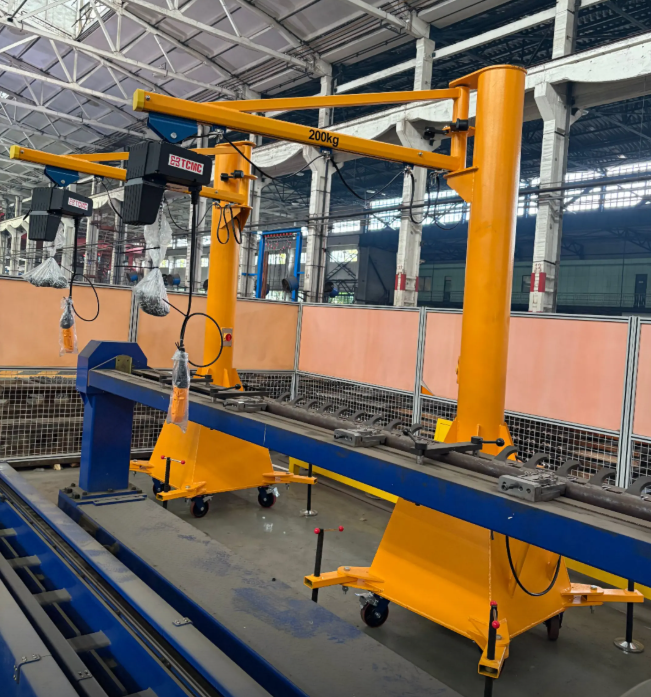
Summary
The safe operation of a wheel-mounted jib crane is a systematic project. It relies on well-designed and precision-manufactured hardware, but even more so on that series of safety devices that act like "loyal guards," especially the core overload protection device and moment limiter. What perfectly integrates this hardware and these safety devices, enabling them to perform their intended functions, is scientific, rigorous, and standardized installation technology. Only by deeply understanding the working principles of jib cranes, strictly adhering to safe operating procedures, and controlling quality from the installation source can we truly ensure that these highly efficient machines serve us while maximizing the protection of life and property safety.