
Column-Mounted vs. Wall-Mounted Jib Cranes: Analysis of Differences and Applications
In modern industrial production workshops, warehouses, and assembly lines, the jib crane has become a key material handling equipment due to its flexibility, efficiency, and space-saving advantages. Among the many types of jib cranes, the column-mounted jib crane and the wall-mounted jib crane are the two most common. Although they both belong to the jib crane family, there are significant differences in structure, installation method, and applicable scenarios. This article will provide an in-depth analysis of the characteristics of these two devices, helping you make informed decisions based on actual needs.
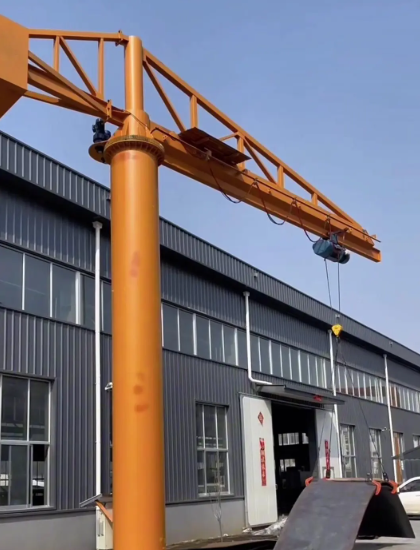
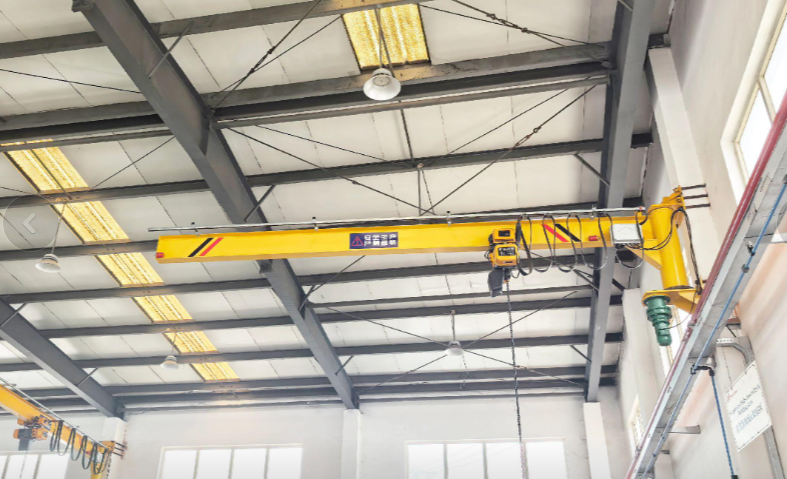
Column-Mounted Jib Crane: An Independent and Efficient Handling Specialist
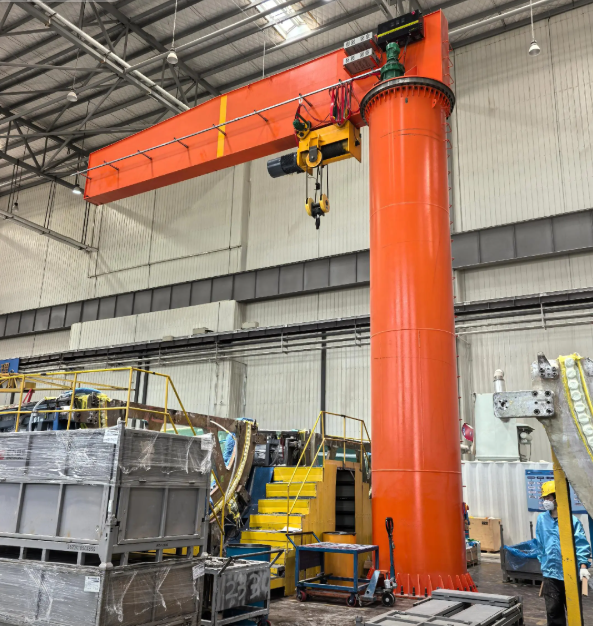
The core feature of a column-mounted jib crane is a vertical ground column as the main support structure. This column is typically secured to a foundation via anchor bolts, forming a completely independent lifting unit. The jib arm (usually an I-beam or box beam) rotates around the column, with a common rotation angle ranging from 180° to 360°, covering a circular or fan-shaped working area.
The main advantages of this type of jib crane lie in its independence and flexibility. Since it does not rely on walls or workshop structures, it can be installed in the center of a workshop, next to a production line, or anywhere it is needed. The 360° rotation version can achieve full coverage without blind spots, making it particularly suitable for multi-directional operations around equipment. Its lifting capacity ranges widely, from a few hundred kilograms to several tons, meeting the handling needs of most small and medium-sized workpieces.
However, the column-mounted jib crane has certain requirements for the ground foundation, needing a solid and level floor to ensure stability. Its installation is relatively complex, and it occupies some ground space. It is commonly found in machining workshops, mold manufacturing, maintenance bays, and medium-scale production assembly lines.
Wall-Mounted Jib Crane: A Space-Optimized Solution Relying on Walls
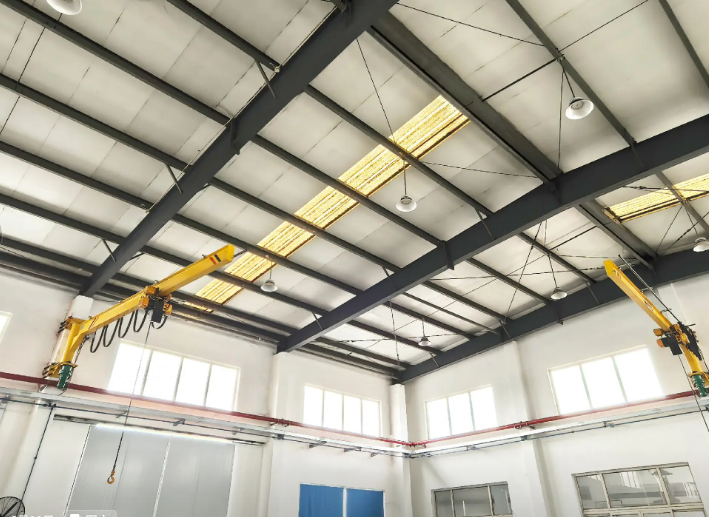
As the name suggests, the wall-mounted jib crane does not use an independent column for support. Instead, its structure is directly fixed to a sturdy wall, workshop column, or structural column via high-strength connectors. Its jib arm can also rotate (typically 180° to 270°), but its coverage area is a fan-shaped space extending from the wall.
The greatest advantage of this jib crane is its extreme saving of floor space. Since all load-bearing structures rely on the existing building, it occupies almost no valuable floor area, allowing for more flexible layout of ground equipment and logistics pathways. Installation is relatively straightforward, especially suitable for sites with restrictions on floor modifications.
Of course, the "lifeline" of the wall-mounted jib crane lies in the sufficient strength and stability of the wall or structure it attaches to, which must withstand the loads and moments generated during lifting operations. Therefore, a rigorous structural assessment is required before installation. Its working range is limited by the wall position, typically serving workstations, assembly lines, or storage areas arranged along walls. It is an ideal choice for fixed-point material handling in space-constrained workshops, along-wall warehouse operating areas, or at the ends of production lines.
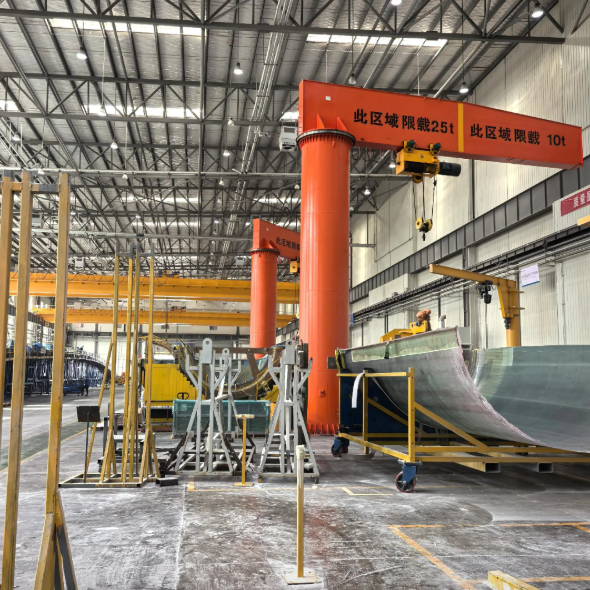
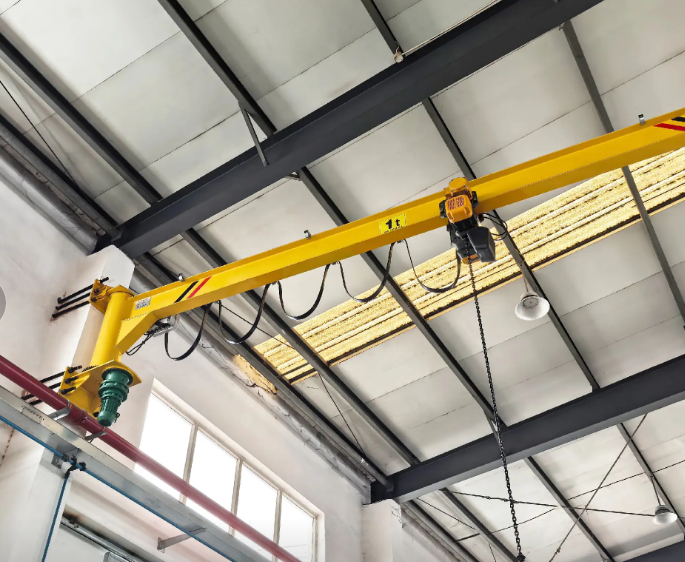
Summary of Key Differences and Selection Guide
The comparison shows that choosing between a column-mounted jib crane and a wall-mounted jib crane essentially involves a trade-off between "independent flexibility" and "space economy":
Installation & Foundation: The column-mounted jib crane requires a dedicated concrete foundation. The wall-mounted jib crane requires a certified, load-bearing wall or column.
Space Occupation: The column-mounted jib crane occupies and utilizes floor space. The wall-mounted jib crane utilizes vertical or overhead space, freeing up the floor beneath.
Flexibility & Placement: The column-mounted jib crane offers great placement freedom anywhere on the floor. The wall-mounted jib crane's location is fixed by the existing building structure.
Coverage Range: The column-mounted jib crane often provides up to 360° rotation. The wall-mounted jib crane typically provides up to 270° rotation, limited by the wall.
Ideal Application: The column-mounted jib crane is superior for central work areas, multi-directional tasks, and standalone stations. The wall-mounted jib crane excels in perimeter applications, along walls, in tight spaces, or where floor obstructions must be avoided.
As important material handling solutions, whether column-mounted or wall-mounted, modern jib cranes focus on user-friendly design, such as low-friction rotation bearings, modular components, and ergonomic control systems (e.g., wireless remote control), to reduce worker labor intensity and improve operational safety and efficiency.
Conclusion
In summary, the jib crane provides unparalleled convenience for localized, intensive material lifting through its unique rotating arm design. The column-mounted jib crane offers comprehensive service with its independent stance, while the wall-mounted jib crane acts like an assistant leaning against the wall, maximizing spatial potential. When selecting equipment, companies should comprehensively consider workflow, facility conditions, spatial layout, and load requirements to make the choice that best matches production needs, allowing this efficient handling tool to truly become a powerful asset in enhancing productivity.