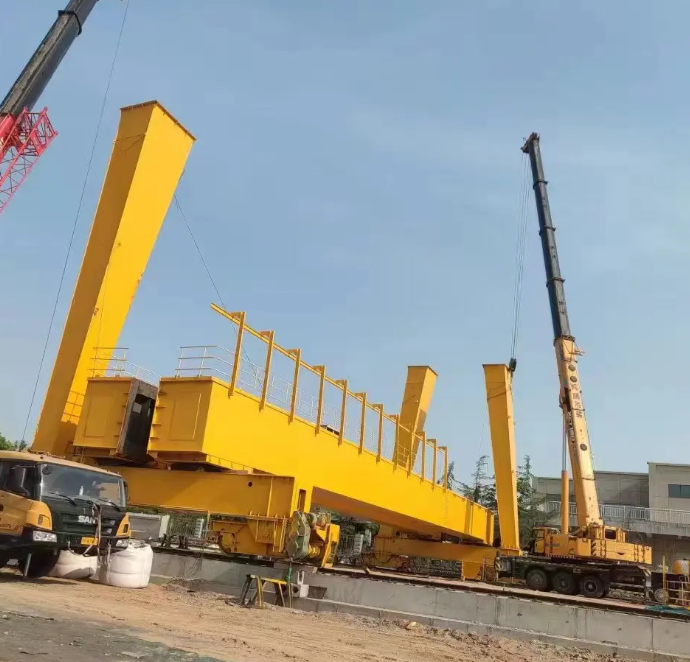
Standardized Procedure and Safety Control for Maintenance and Replacement of Gantry Crane Traveling Bogie Assembly
The traveling mechanism of a gantry crane is critical to operational efficiency in ports, yards, and manufacturing facilities. Under long‑term heavy‑load and frequent movement, components of the gantry crane traveling bogie assembly—such as wheels, bearings, equalizing beams, and drives—are prone to wear or fatigue failure, requiring standardized maintenance and replacement. This article describes the core steps and emphasizes safety control of the jacking operation, a high‑risk link in the process.
Preparations Before Maintenance and Replacement
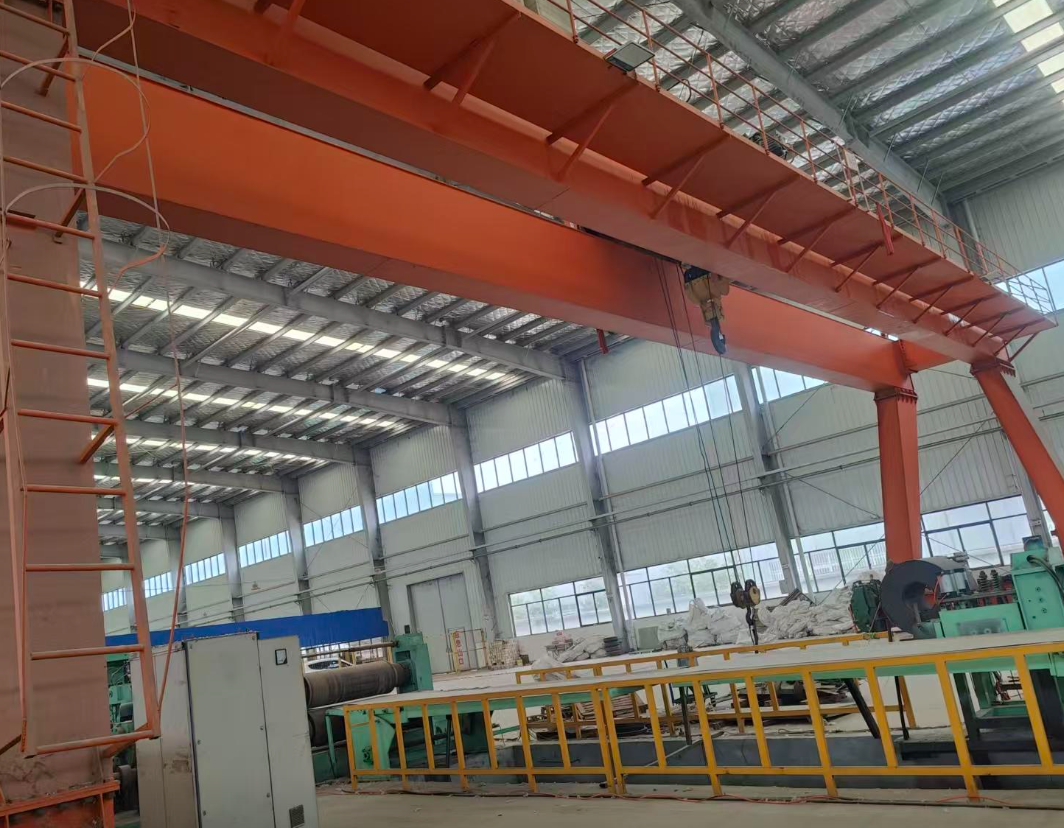
Work on the traveling mechanism of a gantry crane must be performed under shutdown with robust safety measures. The gantry crane should be moved to a designated area with level ground, anchored, rail clamps engaged, and wheel chocks placed. If multiple gantry cranes share the track, barriers and warning signs are required.
Technical preparation includes consulting the gantry crane documentation to verify the structure and connection details of the gantry crane traveling bogie assembly. Spare parts should be inspected for correct model, bearing grease condition, and seal integrity.
The jacking operation is required to unload the bogie assembly. Hydraulic jacks with adequate capacity, supplemented by rigid support blocks, must be positioned under each leg. Before the jacking operation, technicians ensure that jacking points avoid weld zones and that the jacking force is applied vertically.
Standard Procedure for Maintenance and Replacement
Whole Machine Jacking and Stabilization
Jacks are placed under each leg, and synchronized staged jacking is performed—each lift not exceeding 50 mm, with rigid support blocks inserted immediately afterward. For large gantry cranes, the lift height is typically just enough to raise the wheel treads 20–30 mm off the rail. During the jacking operation, dial gauges monitor horizontal displacement of adjacent legs to prevent structural twist. Once the full weight is borne by the support blocks, removal of the gantry crane traveling bogie assembly can proceed.
Removal of the Old Bogie Assembly
The gantry crane traveling bogie assembly is usually connected by high‑strength bolts. Mark relative positions, especially adjustment shims that affect wheel load distribution. Loosen bolts in a diagonal sequence using a torque wrench; if rusted, apply heat or specialized tools without hammering. For drive units, disconnect the coupling first. The removed assembly is lifted carefully to avoid damage to wheel treads and bearing housings.
Installation of the New Bogie Assembly
Clean the connecting surface of the lower crossbeam and check flatness. Hoist the new gantry crane traveling bogie assembly into position, insert locating bolts, and tighten in three stages to the specified preload. Reinstall adjustment shims in the recorded order and check joint clearance. For the driving wheel set, verify concentricity between the motor and wheel axes.
Lower the gantry crane via the jacking operation until wheels contact the rails. Inspect that all wheels bear evenly; if any wheel is suspended, adjust shims or bolts until uniform contact is achieved.
Trial Operation and Verification
Perform no‑load and rated‑load trials. Start with low‑speed jogging to detect abnormal noise or vibration. The gantry crane should travel the full rail length to verify lateral clearance and horizontal wheel gaps. Measure driving wheel speed consistency to avoid deviation.
After the trial, retighten all bolts and check bearing temperature rise. Final acceptance of the gantry crane traveling bogie assembly includes wheel load measurement to ensure deviation from design values is within ±10%.
Key Considerations
Safety Redundancy for the Jacking Operation
The jacking operation is the highest‑risk step in the entire replacement process. During the jacking operation, hydraulic jacks serve only as lifting tools; once the required height is reached, rigid support blocks must immediately take over the load. If wind speeds exceed force 6, the jacking operation must be suspended and the gantry crane re‑anchored before any further work. Throughout the jacking operation, personnel are strictly prohibited from placing any body part under the legs, and a dedicated coordinator is required to ensure synchronized jack control.
Bolt Tightening Process
Bolts on the gantry crane traveling bogie assembly endure alternating loads and vibration. Use a torque wrench in stages and apply threadlocker. Critical bolts require retightening after 24 hours. Do not mix strength grades; use original fasteners whenever possible.
Rail Condition Pre‑inspection
Many bogie assembly failures originate from poor rail condition. Before replacement, inspect rail gauge, elevation, joints, and clips. Repair any settlement or distortion first; otherwise, the new gantry crane traveling bogie assembly will quickly develop wheel eccentric wear or bearing damage.
Complete Maintenance Records
Record jacking height, support placement, bolt torque, shim changes, and trial data. These records form the technical archive and serve as a baseline for future maintenance of the gantry crane traveling bogie assembly. For heavy‑duty gantry cranes with multi‑stage equalizing beams, precise shim records are essential for load balance.

Conclusion
Maintenance and replacement of the gantry crane traveling bogie assembly requires coordination across mechanical, electrical, and safety disciplines. From precise control of the jacking operation to procedural discipline in assembly and fine‑tuning of parameters, each step directly affects the gantry crane’s traveling accuracy and service life. By adhering to standardized procedures and maintaining strict control over high‑risk steps such as the jacking operation, equipment managers can achieve reliable installation and long‑term operational safety.