
The Site Entry and Construction of Large Crawler Cranes: A Complete Process Analysis from Transportation to Lifting
In the realm of modern engineering construction, the large crawler crane serves as an indispensable piece of heavy lifting equipment. Its site entry and construction phase often dictates the progress and safety of an entire project. When people gaze upon these steel giants, they rarely consider that transporting such colossal machinery to the construction site and completing its assembly is, in itself, a complex systematic project. This article will detail the complete process of how a large crawler crane successfully executes its site entry and construction.
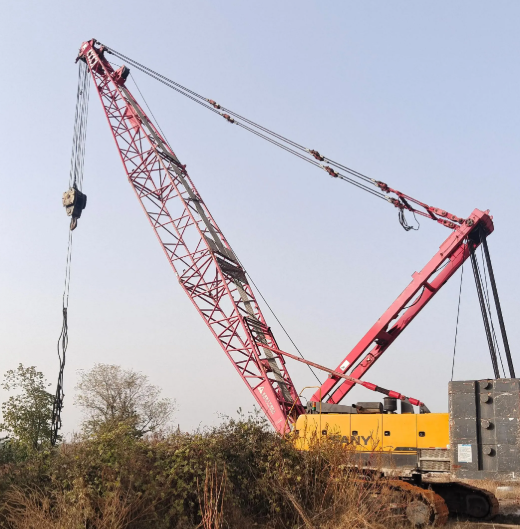
Preliminary Survey and Preparation for Site Entry and Construction
Any successful lifting operation begins with meticulous planning. When a large crawler crane is required to commence site entry and construction, the technical team must first conduct a comprehensive survey of the job site. This phase focuses on assessing the load-bearing capacity of transport roads, turning radii, and overhead obstacles. Given that a large crawler crane can weigh several hundred tons, or even over a thousand tons, every bridge and culvert along its site entry and construction route must undergo structural verification. Simultaneously, technicians need to evaluate the transport vehicle's clearance based on the crawler crane's dimensions, and if necessary, arrange for temporary road reinforcement or widening. Following the survey, the project team develops a detailed site entry and construction plan. This document outlines not only the transport route for the large crawler crane but also determines the on-site assembly area, crane positioning zones, and the scope of lifting operations. It is crucial to note that the site entry and construction of a crawler crane often requires coordination with other contractors, so the plan must also specify time windows and safety measures for overlapping activities.
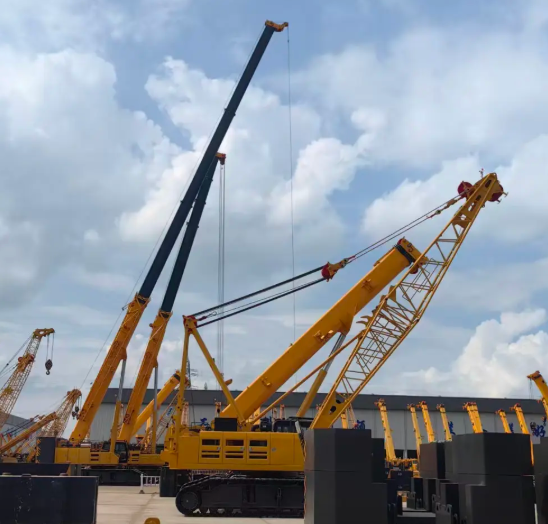
Disassembly and Transportation of the Large Crawler Crane
A large crawler crane cannot be transported as a single unit; it must be broken down into several modules for road travel. This process typically begins with the removal of the hook, counterweights, and boom, followed by separating the upper structure from the lower crawler assembly. The heaviest components are often the slewing platform and core machinery, which require transport via hydraulic modular trailers. For components exceeding standard width or height limits, special permits for oversized transport must be obtained before departure, and escort vehicles are arranged for guidance. Risk control during transport is critical. The components of the large crawler crane must be securely lashed and fastened to prevent shifting. The transport team continuously monitors tire pressure, the center of gravity of the cargo, and road gradients. When parts of the crawler crane traverse urban roads or highways, travel is usually scheduled during nighttime or low-traffic periods to minimize disruption to public traffic.
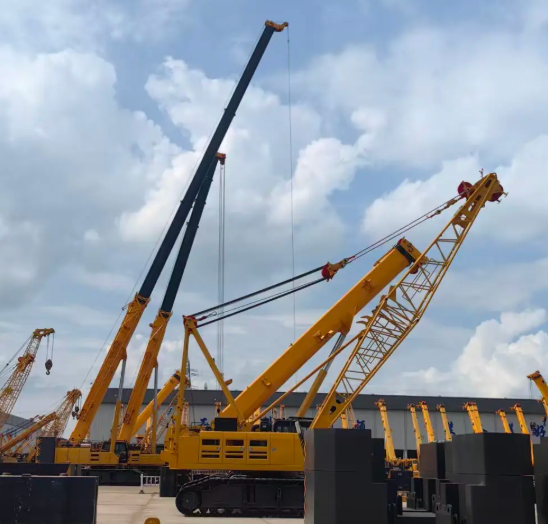
On-site Assembly and Commissioning
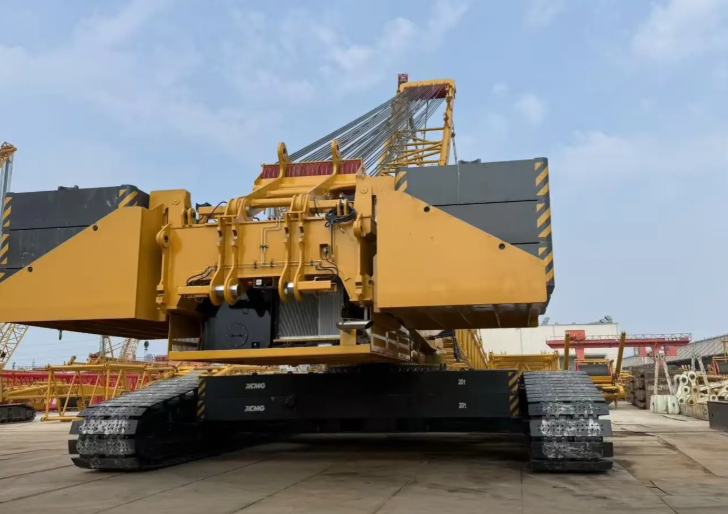
Once the components arrive at the construction site, the site entry and construction process enters its most critical phase: assembly. This stage typically requires the assistance of another auxiliary crane to reassemble the modules of the large crawler crane. The first step is installing the crawler traveling gear, where the two massive crawler tracks must be precisely aligned on level, compacted ground. Next, the slewing bearing and upper structure are installed, followed by the boom system and counterweights. During assembly, safety control for the crawler crane's site entry and construction is paramount. All connecting bolts must be tightened to specified torques, hydraulic lines must be meticulously inspected for leaks, and the electrical system requires comprehensive testing. After mechanical assembly, technicians perform no-load commissioning on the large crawler crane to verify the correct operation of all mechanisms and ensure safety limit devices are sensitive and reliable.
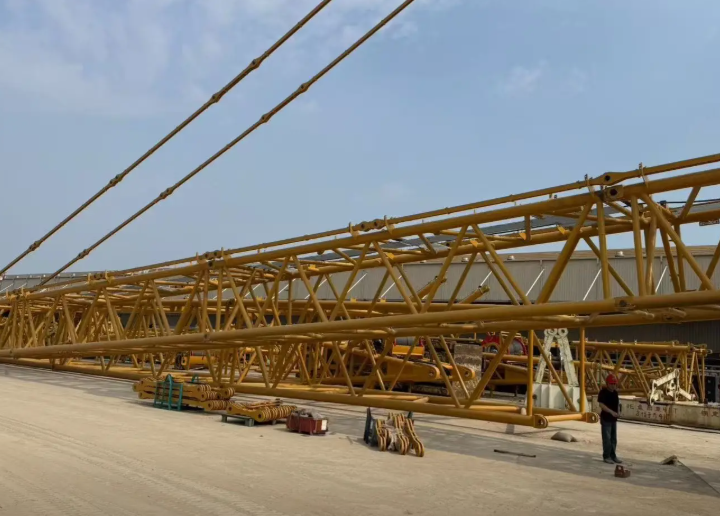
Final Confirmation for Site Entry and Construction
Before officially commencing work, the large crawler crane must undergo load testing to validate its performance. Tests typically include both rated capacity and overload scenarios, thoroughly examining the crane's structural integrity, stability, and braking performance. Simultaneously, operators test the crawler crane's travel functions, ensuring it can maneuver effectively on the construction site. Upon successful completion of all tests, the large crawler crane is considered to have fully completed its site entry and construction and is ready for actual lifting operations. However, the project team must maintain a high level of vigilance, as every subsequent repositioning of the crawler crane on site constitutes a minor site entry and construction event, requiring strict adherence to safety protocols.
Conclusion
The site entry and construction of a large crawler crane is a comprehensive task integrating transport engineering, mechanical engineering, and construction management. From the initial route survey to the final load test, every step demands meticulous planning and strict execution by specialized teams. These seemingly routine procedures are what ensure the crawler crane can operate safely and reliably, unleashing its immense capabilities on site. As project scales continue to grow, the technology surrounding large crawler crane site entry and construction constantly evolves, providing ever-stronger support for modern engineering endeavors.
When we witness those imposing large crawler cranes standing tall on construction sites, we should recognize them not merely as simple lifting machines, but as embodiments of human engineering ingenuity. And the starting point for this marvel is that seemingly ordinary yet critically important process of site entry and construction.