
Trackless Gantry Crane vs. Rail‑Mounted Gantry Crane: Which Is More Practical?
In the field of industrial handling and open‑air material loading, the gantry crane is an indispensable piece of equipment. Whether in a storage yard, at a dock, or on a construction site, you can always find a gantry crane at work. Based on their travelling method, gantry cranes fall into two main categories: the trackless gantry crane and the rail‑mounted gantry crane. Many users often wonder: which one is more practical? To answer this question, we need to analyse several dimensions, including the application scenario, initial investment, operational efficiency, and maintenance difficulty.
Traditional advantages of the rail‑mounted gantry crane
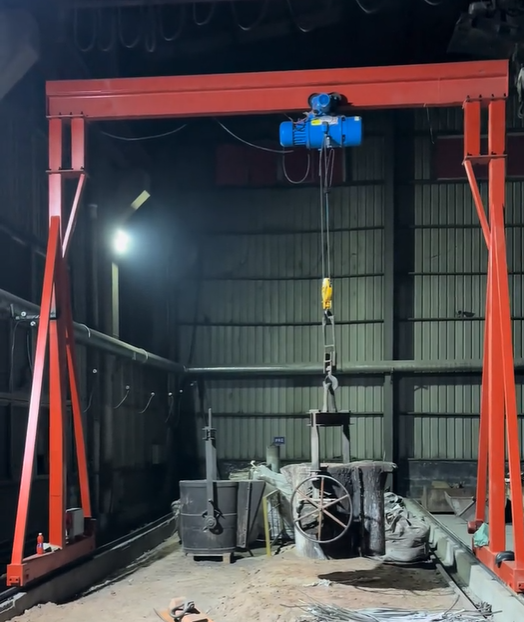
The rail‑mounted gantry crane appeared earlier. It relies on pre‑laid steel rails, with wheels and rails working together for precise positioning. For fixed‑route, repetitive operations, the rail‑mounted gantry crane demonstrates very high efficiency. For example, in railway freight yards or large ports, where container lifting tasks are repetitive and regular, a rail‑mounted gantry crane can travel quickly along the rails, and automation is relatively easy to implement.
In addition, the rail‑mounted gantry crane has low rolling resistance and low energy consumption. The rails restrict the equipment’s direction but also ensure travelling stability, making side drift unlikely. For heavy‑load, high‑frequency, long‑distance linear handling, the practicality of the rail‑mounted gantry crane is outstanding. However, its disadvantage is obvious: laying the rails requires upfront investment, and once fixed, the operating range is limited to the area covered by the rails, offering poor flexibility.
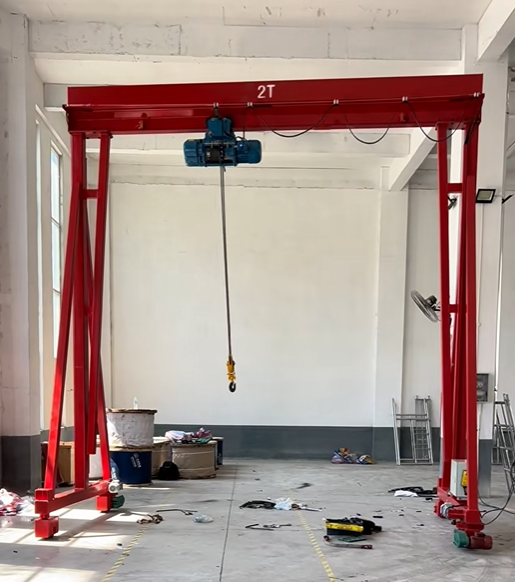
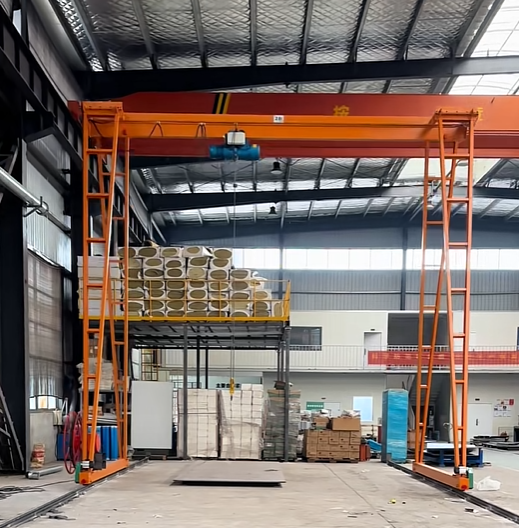
Flexible breakthrough of the trackless gantry crane
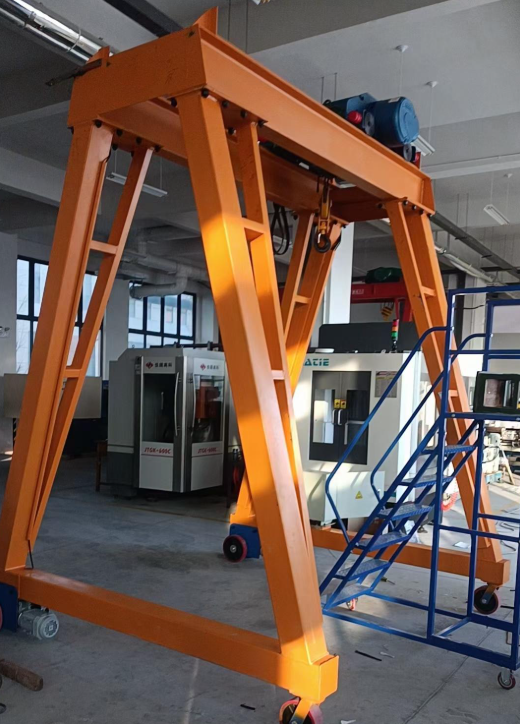
In contrast, the biggest feature of a trackless gantry crane is that it does not rely on rails. It usually uses rubber tyres, is powered by a diesel engine, battery, or hybrid system, and can turn freely, travelling anywhere on hardened concrete or level ground. This flexibility allows the trackless gantry crane to demonstrate stronger practicality in many scenarios.
For instance, in precast beam yards, steel structure workshops, or open storage yards, where material placement changes frequently and lifting points are not fixed, if you used a rail‑mounted gantry crane you might need to lay multiple rail tracks or repeatedly adjust the lifting points, whereas one trackless gantry crane can simply drive directly to the goods and lift them. Another example: on a construction site, as the work area keeps advancing, a trackless gantry crane can move along with the working face without being constrained by rails. For multi‑product, small‑batch, dispersed‑point operations, the trackless gantry crane is often preferred.
Of course, the trackless gantry crane also has shortcomings. Its tyres demand a high‑quality ground surface; long‑term operation on gravel or soft ground can cause damage. Meanwhile, its travelling mechanism is more complex than that of a rail‑mounted gantry crane, leading to slightly higher maintenance costs. Furthermore, without rail guidance, the operator needs better driving skills. Frequent turning and sudden stops increase energy consumption and tyre wear.
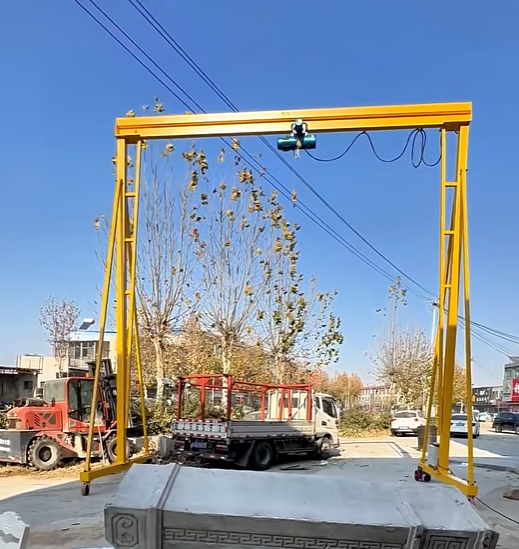
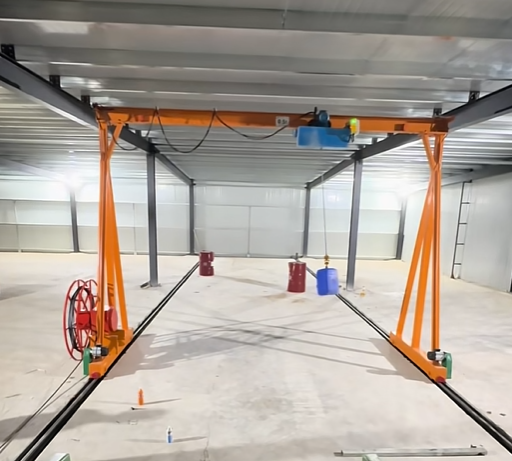
Practicality comparison: the scenario decides
So, which type of gantry crane is more practical? The answer is not absolute – it depends heavily on the application scenario:
If your operation is characterised by fixed routes, large batches, and fast pace – for example, container handling at a port, railway intermodal stations, or row‑by‑row cargo handling in large storage yards – then the rail‑mounted gantry crane has clear advantages in precision, efficiency, and low operating cost. Its practicality is higher. Although the rail system requires initial investment, the cost per unit of work is lower over the long term.
If your working conditions involve changing sites, scattered lifting points, and frequent repositioning – such as construction sites, precast component yards, temporary storage areas, or emergency rescue sites – then the flexibility of the trackless gantry crane is irreplaceable. Its ability to “move on demand” can greatly reduce auxiliary time and avoid rail‑laying expenses, making it more practical from a comprehensive benefit perspective.
There is also a compromise: some users adopt a “semi‑railed” solution – laying rails in the main area while allowing the trackless gantry crane to move freely at the edges. But this is essentially a combination of the two forms, suitable for especially complex working environments.
Purchase advice and trends
For ordinary users, it is advisable to first clarify your own requirements: evaluate the number of daily operations, movement frequency, load weight, site area, and ground conditions. If the operation runs many days per year with repetitive routes, give priority to the rail‑mounted gantry crane. If the lifting points change frequently or temporary lifts are needed, the trackless gantry crane is more appropriate.
Looking at technological trends, the trackless gantry crane is moving towards electrification and intelligence. Lithium batteries and automatic navigation technology are gradually narrowing the gap in energy consumption and manoeuvrability compared with the rail‑mounted gantry crane. At the same time, rail‑mounted gantry cranes are also adopting variable‑frequency control and automated truck alignment systems, further consolidating their position in specialised ports.
In short, no single type of gantry crane can completely replace the other. True “practicality” is about matching the equipment to your specific work. Choose the right type, and a suitable gantry crane will become the most reliable helper on your production line.