
A Comprehensive Guide to the Replacement Process for a Damaged Bridge Crane Hook Assembly
In busy ports, large freight yards, and construction sites, heavy-lifting equipment is indispensable for material handling. The safety and reliability of this equipment are directly linked to operational efficiency and personnel safety. The bridge crane hook assembly, as the critical component that directly bears the load, is constantly subjected to high stress and wear. If cracks, deformation, or excessive wear are detected on the bridge crane hook, the equipment must be stopped immediately for replacement. This article will detail the step-by-step replacement process for a damaged hook assembly, key precautions, and crucial points, with a strong emphasis on the vital role of preventive maintenance in avoiding such failures and extending service life.
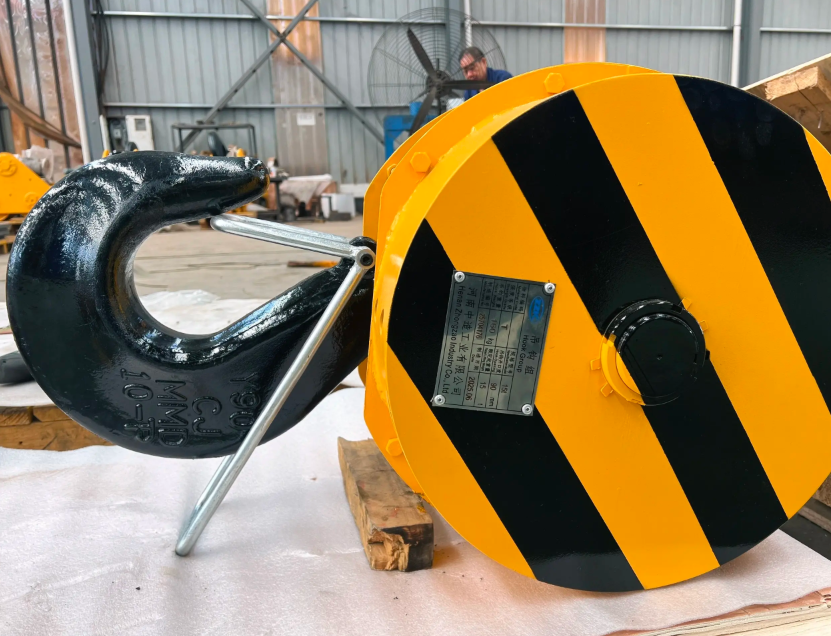
Damage Identification and Preliminary Preparation
Before any replacement operation begins, accurately determining whether the bridge crane hook assembly has reached its discard criteria is the first step. Common types of damage include: throat opening exceeding the limit, wear on the dangerous section exceeding 10% of the original height, surface fatigue cracks, or failure of the hook nut or safety latch. If any of these issues are found on the hook, the equipment must be taken out of service immediately. Proper preventive maintenance routines would have identified these issues earlier, highlighting its importance in daily operations. Furthermore, a strong commitment to preventive maintenance ensures that such severe wear is caught before it becomes a critical safety hazard.
Preparation work for the repair is crucial and should be guided by preventive maintenance principles:
Plan Development and Approval: The technical supervisor must develop a detailed hoisting replacement plan for the bridge crane hook, clearly defining the division of labor, safety measures, and emergency procedures. This plan requires official approval.
Tool and Equipment Preparation: Prepare wire ropes, shackles, lever hoists, wrenches, pry bars, and spirit levels that match the equipment's tonnage. It is particularly important to ensure that the rated capacity of the auxiliary lifting equipment used to hoist the new hook assembly exceeds the component's own weight.
Spare Part Verification: Confirm that the specifications and tonnage of the new bridge crane hook assembly are identical to the original design. Inspect its certificate of quality to ensure the spare part itself has no manufacturing defects.
Safety Briefing: Conduct an on-site safety briefing for all personnel involved, clarifying individual responsibilities and establishing a clearly marked warning perimeter for the operation.
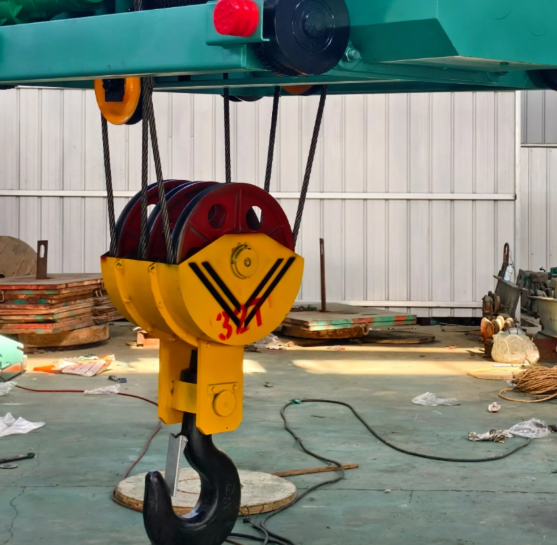
Core Steps for Disassembling the Old Bridge Crane Hook Assembly
The disassembly process is technically challenging and represents a "minor surgery" on the bridge crane's structure. Operations must strictly follow procedures, with the core objectives being to release wire rope tension and safely disconnect components from the bridge crane hook.
Position the Bridge Crane: Move the bridge crane to the maintenance area, position the trolley conveniently for disassembly, and apply the rail clamps to ensure the entire bridge crane is stable.
Release Wire Rope Tension: Operate the hoisting mechanism of the bridge crane to slowly lower the damaged bridge crane hook assembly onto support stands, allowing the wire ropes to become completely slack. This step is critical to prevent injury during unrigging.
Remove Wire Rope Clamps: Carefully remove the clamps securing the wire ropes at the drum end. Disconnect the wire ropes one by one from the moving pulley block of the bridge crane hook assembly and coil them properly to prevent kinking.
Disconnect Other Attachments: Remove other connections between the bridge crane hook assembly and the bridge crane trolley, such as limit switch actuators.
Hoist Away the Old Assembly: Using the pre-arranged mobile crane, properly locate the center of gravity of the bridge crane hook assembly and secure it with slings. Apply slight tension, double-check that all connections are free, and then carefully hoist and transport the old bridge crane hook away.
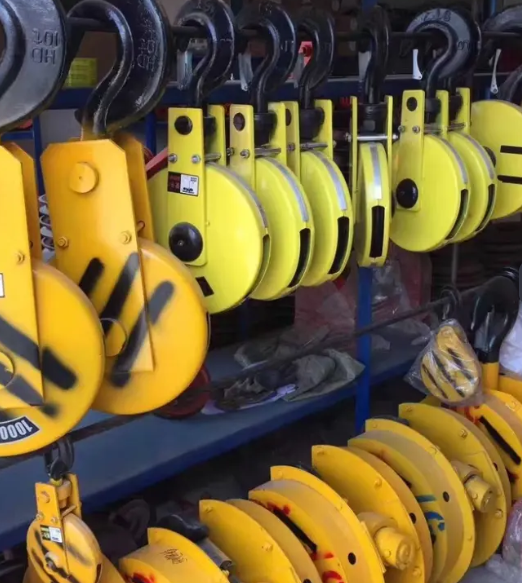
Installation and Commissioning of the New Hook Assembly
Installing the new bridge crane hook assembly is critical for restoring function and must be performed accurately. This phase is an excellent opportunity to reinforce the principles of preventive maintenance by ensuring everything is in optimal condition before reassembly.
Inspection and Cleaning: Before installation, thoroughly clean the connection points on the trolley. Carefully inspect the new hook's sheave grooves and check that the bearings rotate freely. This step embodies the spirit of preventive maintenance, as it prevents future issues caused by contaminated or faulty components.
Positioning for Installation: Use the mobile crane to slowly hoist the new hook assembly into position beneath the trolley. Adjust its position to align it correctly with the fixed pulley block.
Reeving the Wire Rope: This is the most technically demanding step involving the hook. The wire ropes must be reeved strictly according to the original design specifications, ensuring the rope runs correctly without rubbing. After reeving, re-tighten the clamps on the drum to the specified torque.
Reattach Accessories: Reinstall and adjust accessories like limit switches. Ensure the limit switches reliably cut off the circuit when the hook reaches its upper travel limit.
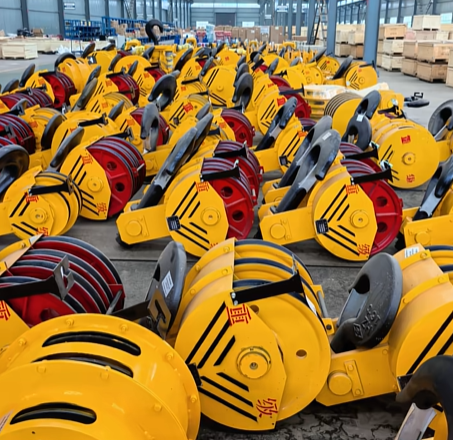
No-Load and Load Tests on the Bridge Crane
After the replacement of the bridge crane hook, the bridge crane must never be put into service immediately. Rigorous testing is mandatory:
No-Load Test: Start the bridge crane and perform hoisting and lowering operations without any load. Observe whether the bridge crane hook assembly operates smoothly and if there are any abnormal noises from the bridge crane.
Load Test: Gradually increase the load on the bridge crane hook, performing dynamic tests at 75%, 100%, and 110% of the bridge crane's rated capacity. The main checks include the stability of the bridge crane hook under load and the reliability of the bridge crane's brakes.
Final Inspection: After testing, re-check the tightness of the bridge crane hook assembly nuts. Only after confirming everything is normal can the bridge crane be handed over for use.
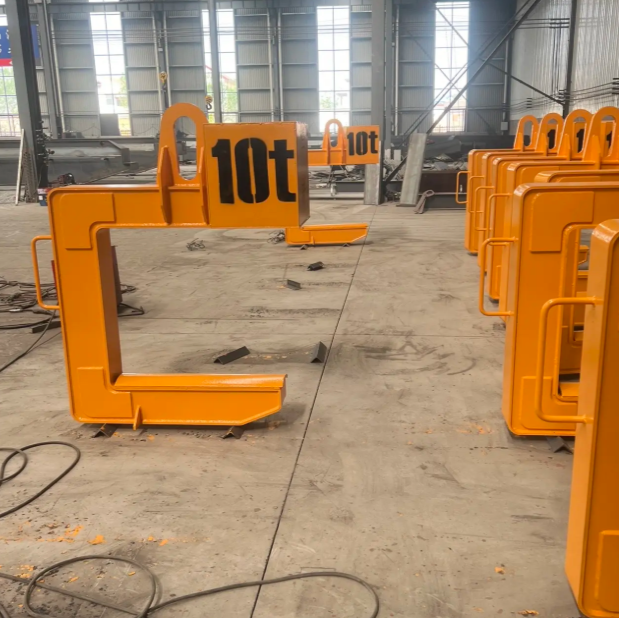
Keyword Summary: The Value of Preventive Maintenance
If a strategy of preventive maintenance is genuinely implemented in daily operations, for example:
Regularly scheduled inspections of the equipment, focusing on the wear at the dangerous section of the hook, are a cornerstone of preventive maintenance.
Performing periodic non-destructive testing on the hook to detect microscopic cracks early is a proactive preventive maintenance measure.
Establishing a detailed lubrication schedule for all moving parts ensures smooth operation and is a fundamental aspect of preventive maintenance.
Training operators to avoid rough handling and prevent shock loads on the hook is another critical component of a comprehensive preventive maintenance culture.
By strengthening preventive maintenance, the service life of the bridge crane hook assembly can be significantly extended, transforming "replacement after failure" into "planned replacement" for the bridge crane. This effectively reduces unplanned downtime and ensures the bridge crane operates in a safe state, proving that effective preventive maintenance is the key to managing bridge crane hook wear.