
Port Crane Selection: Comprehensive Analysis of Quay Cranes, Portal Cranes, and Rubber-Tired Gantry Cranes
In port operations, the selection of cranes directly impacts operational efficiency, cost control, and competitive advantage. Quay cranes, portal cranes, and rubber-tired gantry cranes are three mainstream types of equipment, each playing a critical role in specific scenarios. This article will provide a detailed discussion on the performance characteristics, applicable scenarios, and selection factors of quay cranes, portal cranes, and rubber-tired gantry cranes, aiming to offer decision-making references for port managers. The rational selection of quay cranes, portal cranes, and rubber-tired gantry cranes is a core aspect of optimizing port logistics chains.
Core Advantages of Quay Cranes
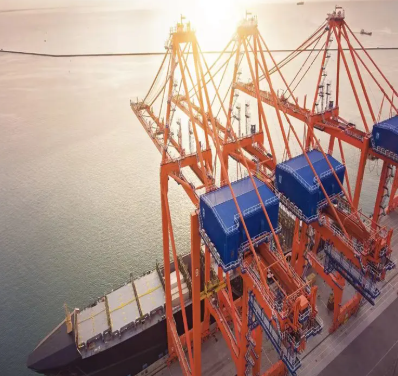
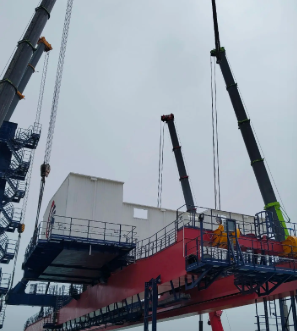
Quay cranes, commonly referred to as quay cranes, are frontline loading and unloading equipment in container terminals. Quay cranes are designed to efficiently handle container ships, with their high lifting height and large span accommodating ultra-large vessels. Quay cranes feature a high degree of automation and can be equipped with intelligent control systems to enhance loading and unloading accuracy and safety. When selecting quay cranes, factors such as port channel depth, vessel size, and container throughput must be considered. The investment cost for quay cranes is relatively high, but their efficiency returns are significant in long-term operations. Therefore, quay cranes are the preferred choice for large container ports. The maintenance of quay cranes requires professional teams, but their reliability ensures continuous operation. With technological advancements, quay cranes are evolving toward greater intelligence and sustainability.
Versatile Applications of Portal Cranes
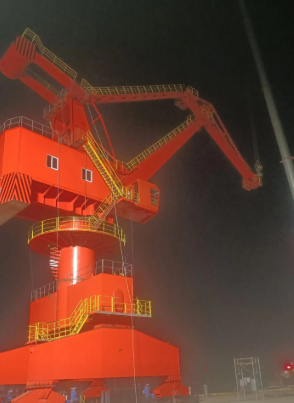
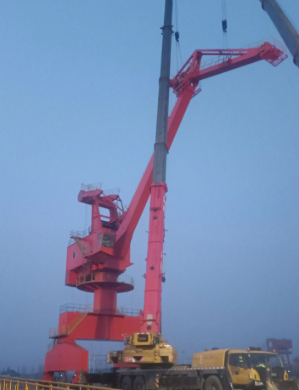
Portal cranes, or portal slewing cranes, are versatile cranes widely used in bulk and general cargo terminals. Portal cranes feature a sturdy structure, can move on tracks, and cover a wide area, making them suitable for handling various goods such as coal, ore, and general cargo. Portal cranes offer high flexibility, though their container handling efficiency is relatively lower compared to quay cranes. When selecting portal cranes, they are best suited for comprehensive ports with diverse cargo types and extensive operational requirements. The cost of portal cranes is moderate, their operation and maintenance are relatively straightforward, and they can be equipped with different attachments to enhance adaptability. The automation of portal cranes is also advancing, improving operational accuracy and efficiency. Thus, portal cranes hold an important position in general-purpose ports. The durability and environmental adaptability of portal cranes enable stable performance even under harsh working conditions.
Efficient Yard Management with Rubber-Tired Gantry Cranes
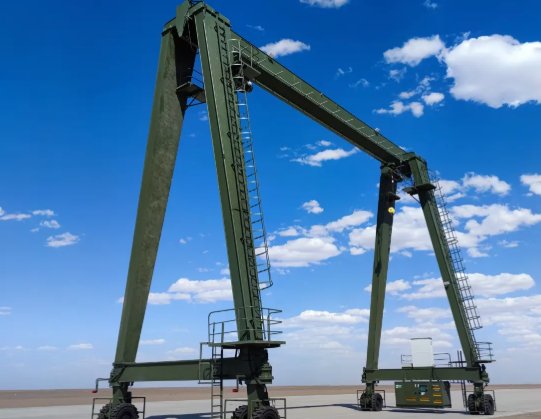
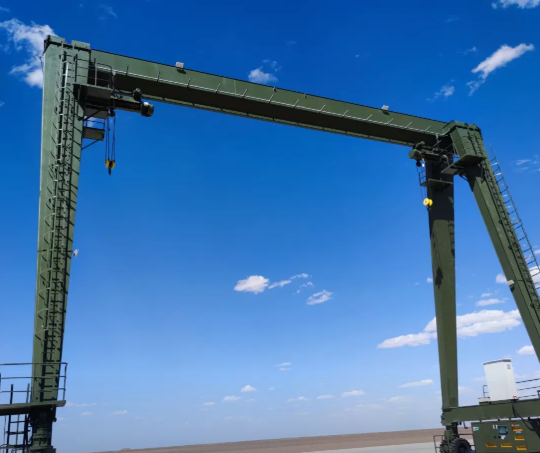
Rubber-tired gantry cranes, fully known as rubber-tired container gantry cranes, are primarily used for transferring and stacking containers within container yards. Rubber-tired gantry cranes rely on tires for movement, offering excellent flexibility and enabling rapid container handling within yards to improve turnover rates. The investment cost for rubber-tired gantry cranes is relatively low, but they require a high level of ground flatness. When selecting rubber-tired gantry cranes, they are suitable for ports with large container yard areas and high throughput. The energy consumption and maintenance costs of rubber-tired gantry cranes require careful attention, but their efficiency in yard operations is outstanding. Rubber-tired gantry cranes often work in conjunction with quay cranes, forming an efficient workflow of "quay cranes unloading ships, rubber-tired gantry cranes transferring containers in yards." The adoption of automated rubber-tired gantry cranes further enhances the intelligence of yard management. Therefore, rubber-tired gantry cranes are indispensable auxiliary equipment in modern container terminals.
Comparative Analysis of Quay Cranes, Portal Cranes, and Rubber-Tired Gantry Cranes
In port crane selection, quay cranes, portal cranes, and rubber-tired gantry cranes require direct comparison. Quay cranes specialize in container ship loading and unloading, offering the highest efficiency; portal cranes are suitable for handling multiple types of cargo, providing strong versatility; rubber-tired gantry cranes excel in container handling within yards. In terms of cost, quay cranes are the highest, portal cranes are moderate, and rubber-tired gantry cranes are the lowest; in terms of flexibility, portal cranes are the strongest, followed by rubber-tired gantry cranes, with quay cranes being less flexible. Selection must balance performance and cost: container terminals should prioritize quay cranes, complemented by rubber-tired gantry cranes; bulk cargo terminals should focus on portal cranes; comprehensive ports can combine portal cranes and rubber-tired gantry cranes. The collaborative operation of quay cranes, portal cranes, and rubber-tired gantry cranes maximizes overall port efficiency.
Key Factors in Selection
Port crane selection requires comprehensive consideration of multiple factors. First, cargo type: ports dominated by containers should prioritize quay cranes and rubber-tired gantry cranes; ports handling bulk and general cargo should choose portal cranes. Second, throughput: high throughput demands the high efficiency of quay cranes. Third, site conditions: flat yards are suitable for rubber-tired gantry cranes; sites with good rail infrastructure are ideal for portal cranes. Fourth, investment budget: quay cranes have high costs, while portal cranes and rubber-tired gantry cranes are more economical. Fifth, operational costs: quay cranes incur high maintenance expenses, portal cranes are easier to maintain, and rubber-tired gantry cranes have relatively higher energy consumption. Sixth, automation trends: automated quay cranes, automated portal cranes, and automated rubber-tired gantry cranes are becoming industry directions. In evaluating these factors, the advantages and disadvantages of quay cranes, portal cranes, and rubber-tired gantry cranes must be carefully weighed to align with the port's long-term development strategy.
Conclusion and Recommendations
Quay cranes, portal cranes, and rubber-tired gantry cranes each have unique characteristics, and correct selection is fundamental to successful port operations. For container-specific ports, quay cranes are essential, with rubber-tired gantry cranes serving as auxiliary equipment; for general-purpose ports, portal cranes are the core equipment; for yard management, rubber-tired gantry cranes play a key role. In the future, with the advancement of intelligence, quay cranes, portal cranes, and rubber-tired gantry cranes will continue to evolve. Port managers should regularly assess needs, optimize crane configurations, and ensure the rational deployment of quay cranes, portal cranes, and rubber-tired gantry cranes. In summary, the rational application of quay cranes, portal cranes, and rubber-tired gantry cranes in port crane selection will drive ports toward greater efficiency, intelligence, and sustainability.