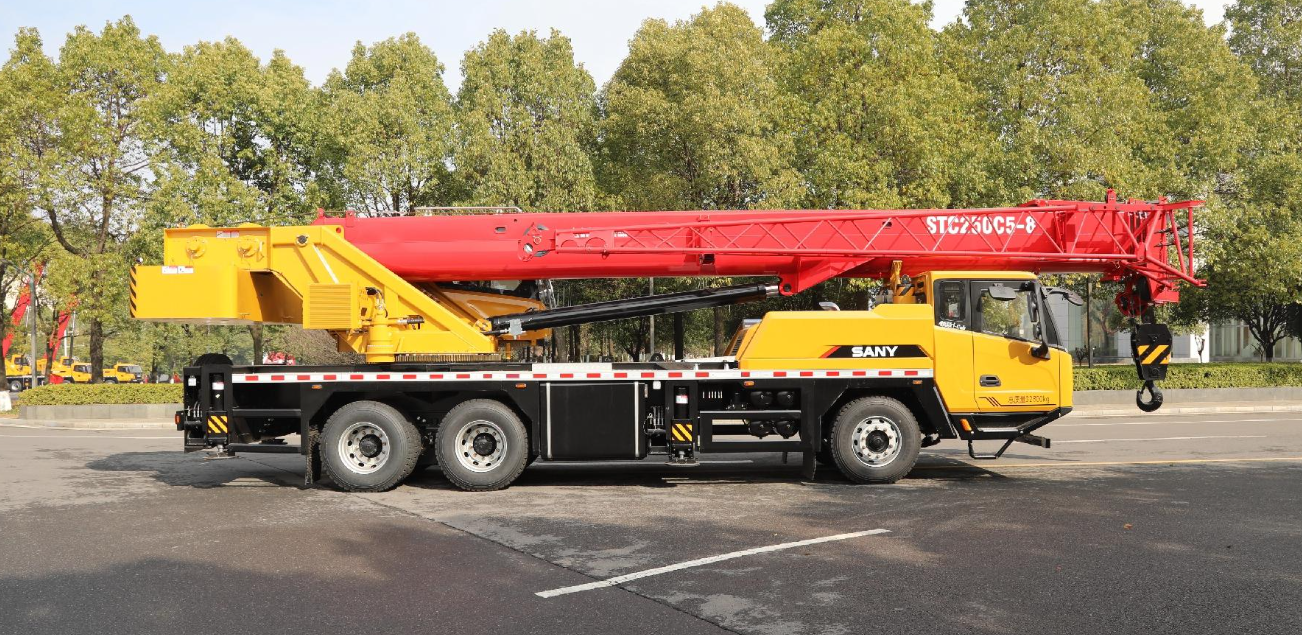
Inspection and regular checks of truck cranes and common problems
Inspection of Truck Cranes Upon Arrival (Source Control, Eliminating Safety Hazards)
Qualification Verification (Compliance Prerequisite for Truck Cranes)
Verify core crane documents: truck crane factory certificate of conformity, special equipment manufacturing license, and periodic inspection report for the past year to ensure crane compliance and prevent safety hazards at the source. Confirm that the truck crane's rated lifting capacity, boom length, and other parameters are consistent with the construction plan, and that crane operators hold valid special operation certificates (person and certificate matching), preventing safety hazards caused by personnel qualification issues.
Appearance and Structural Inspection (Identifying Visible Safety Hazards of Truck Cranes)
Focus on inspecting the truck crane frame, boom, and outriggers: no visible deformation or cracks, and rust area not exceeding the surface area. 5% of key welds are smooth and free of slag inclusions, preventing structural defects from creating safety hazards. Crane connecting parts: Bolts and pins are secure and free of deformation; anti-loosening washers are complete; exposed parts show no severe wear, ensuring the truck crane's structural stability and preventing safety hazards.
Core component inspection (ensuring safe operation of the truck crane and eliminating potential safety hazards)
Truck crane power and transmission system: The engine runs smoothly after starting, without abnormal vibrations or noises; hydraulic system pipes and joints are leak-free, and the oil pressure gauge displays normally, preventing system malfunctions from causing safety hazards.
Crane lifting mechanism: The winch starts and stops sensitively; the wire rope has no broken strands (no more than 3 broken strands per strand), and the wear does not exceed the nominal diameter. 10% of the drum is neatly wound without any slippage, preventing safety hazards caused by crane mechanism failure.
Safety Device Verification (Safeguarding the last line of defense for truck cranes and eliminating potential safety hazards)
Truck crane safety devices: The lifting capacity limiter and torque limiter trigger alarms promptly; the height limiter and anti-overwinding device operate reliably, directly related to crane operation safety, preventing potential safety hazards from arising.
Crane operating system: The cab instrument display is clear, the emergency stop button is responsive, and the operating handles are free from jamming, ensuring no safety hazards in the operation of the truck crane.
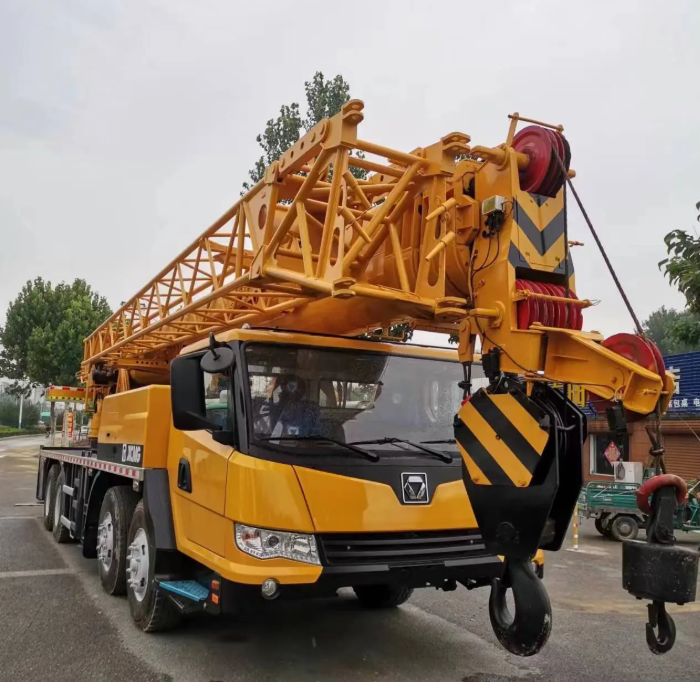
Regular Crane Inspection (Routine protection, dynamically eliminating safety hazards of truck cranes)
Daily inspection: Performed by operators 10 minutes before operation, focusing on potential crane safety hazards.
Quick Inspection: The truck crane's exterior is free of bumps and damage; the wire ropes and hooks show no obvious abnormalities; the outriggers extend and retract flexibly and are firmly planted on the ground, promptly identifying any obvious safety hazards.
Basic Assurance: The crane's braking system pedal travel is normal, and the steering is not off-target; the hydraulic oil and lubricating oil levels are between the markings, with no leaks, preventing basic faults from developing into safety hazards.
Weekly Inspection: Professional maintenance personnel participate, records are kept, and a thorough inspection of the truck crane's safety hazards is conducted.
Structural Verification: The truck crane's boom and frame welds show no new cracks; the connecting bolt torque is within specifications, with no loosening or corrosion, preventing structural safety hazards.
System Testing: The crane's hydraulic system pressure is stable, and the oil pipes show no signs of aging or bulging; electrical wiring connections are secure, and the distribution box is free of moisture and leakage, eliminating system-related safety hazards.
Monthly Inspection: In conjunction with the operation log, in-depth maintenance is performed to eradicate truck crane safety hazards.
Precision Calibration: The truck crane's lifting capacity limiter and torque limiter are recalibrated to ensure the error does not exceed ±5%, preventing safety device malfunctions from causing safety hazards. Maintenance of vulnerable parts: Statistical analysis of crane wire rope wear and broken wire count; ensuring hooks are free from deformation and have the correct opening size; adding specialized oil to the lubrication system, replacing worn filters, and eliminating safety hazards caused by vulnerable part failures.
Annual inspection: A qualified third-party organization conducts a comprehensive assessment to eliminate all safety hazards associated with the truck crane.
Professional Inspection: Non-destructive testing is performed on crane structural components to identify internal hazards; comprehensive performance testing of hydraulic, electrical, and braking systems accurately pinpoints hidden safety risks.
Closed-Loop Management: A formal inspection report for the truck crane is generated, rectification plans are developed for non-conforming items, and a certificate of use is issued after acceptance, ensuring that all safety hazards are eliminated before continued operation.
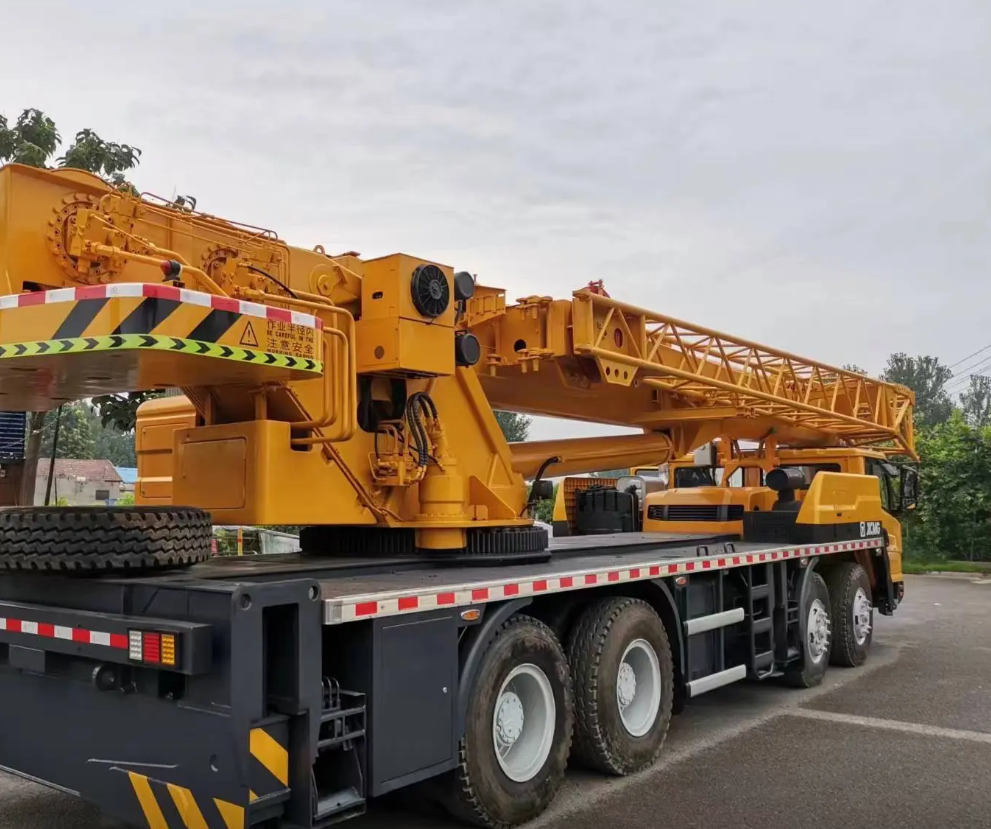
Common Problems and Solutions (Precise Solutions to Completely Eliminate Crane Safety Hazards)
Structural Component Damage (Deformation, Cracks) – A High-Frequency Safety Hazard for Truck Cranes
Causes: Overloading of truck cranes, oblique lifting impacts, and long-term outdoor storage without corrosion protection directly lead to safety hazards.
Solutions: Strictly adhere to the rated lifting capacity requirements of the crane and prohibit rough handling; regularly paint the structural components of the truck crane for corrosion protection; immediately stop the machine upon discovering cracks, and reinforce by welding or replace parts to completely eliminate safety hazards.
Hydraulic System Failure (Leakage, Insufficient Oil Pressure, Slow Operation) – A Typical Safety Hazard for Cranes
Causes: Aging and damage to hydraulic hoses, contaminated and deteriorated hydraulic oil, and damaged oil pump seals can all lead to safety hazards.
Remedies: Regularly inspect and replace aging hydraulic hoses and seals; add hydraulic oil of the appropriate type as required by the instruction manual; clean the filter element monthly; promptly disassemble and repair any abnormal oil pump to eliminate safety hazards at their source.
Wire Rope Wear and Broken Wires (High-Frequency Failure) – A Fatal Safety Hazard for Truck Cranes
Causes: Severe friction between the crane's wire rope and pulleys/drums, insufficient lubrication, and contact with corrosive substances can all create safety hazards.
Remedies: Clean the truck crane's wire rope weekly and apply special lubricant; avoid direct contact between the wire rope and sharp objects; immediately replace the rope when wear exceeds 10% or the number of broken wires exceeds the standard to prevent safety hazards from escalating.
Safety Device Failure (Hidden Risk) – Hidden Safety Hazards of Cranes
Causes: Aging sensors, poor wiring connections, and deliberate shielding of protective functions on truck cranes, concealing safety hazards.
Responsibilities: Monthly calibration of crane sensor accuracy and tightening of wiring connections; unauthorized shielding of safety devices is strictly prohibited; if a malfunction is detected, the crane must be stopped immediately for repair; operation is prohibited until repairs are completed; thoroughly investigate hidden safety hazards.
Violations of Operating Procedures (Human Risk) – Human-caused Safety Hazards of Truck Cranes
Common Manifestations: Crane outriggers not fully extended/operation without sleepers, unlicensed operation, operation under the influence of alcohol, creating human-caused safety hazards.
Responsibilities: Strengthen safety training and assessment for truck crane operators; establish on-site supervision posts; formulate a penalty system for violations; seriously deal with any problems found; eliminate human-caused safety hazards.
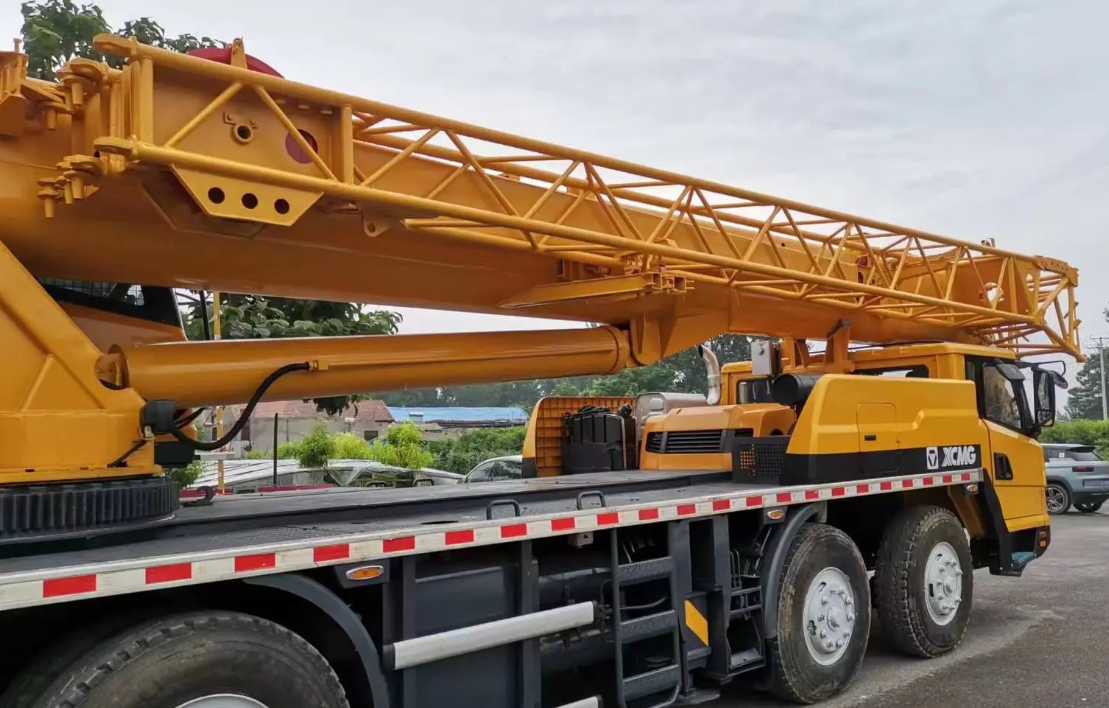
Conclusion
The core of safe operation of truck cranes lies in strictly controlling the crane's entry acceptance standards, implementing a regular inspection system, and accurately preventing various safety hazards. As a core piece of equipment in engineering projects, the safety status of truck cranes directly determines construction safety. Only by standardizing crane inspection procedures and routinely investigating safety hazards can we ensure accident-free construction processes. Construction companies must clearly define the responsibilities of each position and implement the inspection standards for truck cranes to ensure that the cranes are free from safety hazards and maintain a stable and reliable operating condition throughout their entire life cycle.