
Warehouse Chain Hoist Crane: Achieving Precision Load Placement - Technology and Advantages
In modern warehousing and logistics systems, the ability to handle and place materials with precision is paramount for efficiency and safety. The Warehouse Chain Hoist Crane, a cornerstone of material handling, excels in this regard. This equipment, often built around a robust Chain Hoist, provides the accuracy essential for modern operations. Understanding how the Chain Hoist Crane achieves this precision involves examining its key technologies.
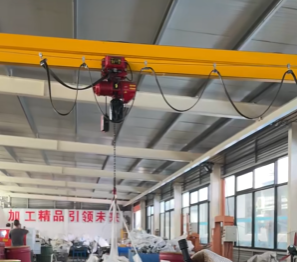
Key Technological Elements for Precision Placement
High-Precision Control Systems
Modern Warehouse Chain Hoist Cranes are typically equipped with advanced variable frequency drive (VFD) control systems, enabling stepless speed variation and precise positioning. Through the coordinated operation of PLCs (Programmable Logic Controllers) and encoders, operators can control the Chain Hoist Crane to reach target positions with millimeter-level accuracy. This precise control capability ensures materials are accurately placed at designated spots, significantly reducing the need for manual adjustments.
Smooth Drive and Braking Systems
The Chain Hoist, as the core lifting mechanism of the crane, directly influences placement precision through the smoothness of its drive system. High-quality chain hoists utilize high-performance motors paired with precision reduction gearboxes to ensure a smooth, shock-free lifting process. The configuration of dual braking systems (electromagnetic and mechanical brakes) ensures both safety and precise stopping, preventing load swing and displacement caused by inertia.
Specialized Safety and Anti-Sway Mechanisms
To further enhance placement accuracy, modern Warehouse Chain Hoist Cranes are often equipped with anti-sway devices and micro-motion (inching) functions. Anti-sway technology suppresses load oscillation through control algorithms, allowing materials to stabilize quickly. The micro-motion function enables operators to make fine adjustments at extremely low speeds, achieving the "slow and steady" precision required for exact placement.
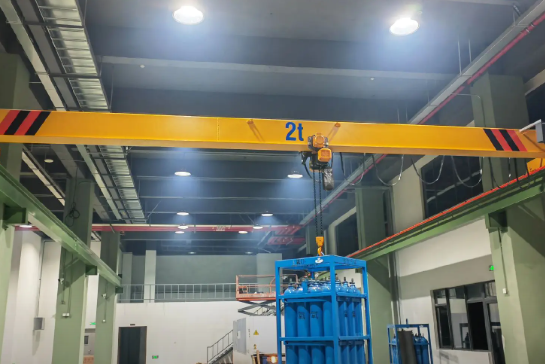
Integration of Smart Technologies
With the development of Industry 4.0 technologies, smart sensors and automatic positioning systems are widely applied in Chain Hoist Cranes. These systems can monitor hook position, load status, and environmental conditions in real-time, automatically calculating the optimal lowering path and speed profile. Assisted by technologies like laser distance measurement and visual recognition, the Warehouse Chain Hoist Crane can achieve semi-automatic or even fully automatic precision placement operations, greatly improving operational efficiency and accuracy.
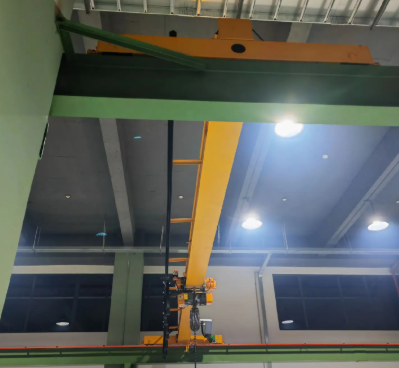
Ergonomic Design for Operator Precision
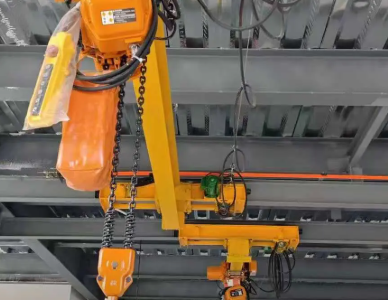
Beyond technical configurations, the design of the operator interface also directly affects placement accuracy. Modern Warehouse Chain Hoist Cranes feature ergonomically designed control pendants that provide clear visual feedback and responsive operation. The widespread use of wireless remote control systems allows operators to choose the best vantage point, further enhancing operational intuitiveness and accuracy.
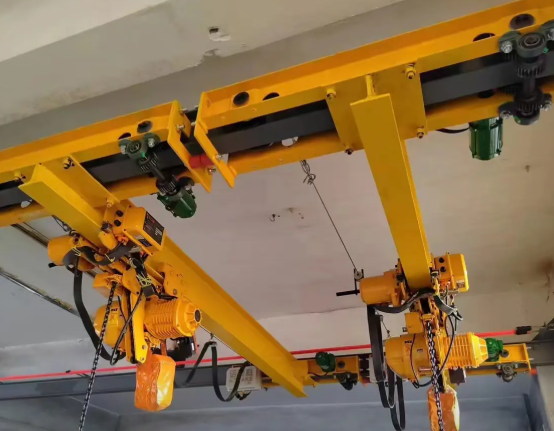
Maintenance: Critical for Sustained Accuracy
The precision of any Chain Hoist Crane depends on its condition. Regular maintenance of the Chain Hoist—including chain inspection and brake checks—is non-negotiable to preserve the long-term accuracy of the Warehouse Chain Hoist Crane.
Conclusion
The Warehouse Chain Hoist Crane achieves the high standards of precision placement required in warehousing operations through the integrated application of precise control systems, advanced drive technology, smart sensors, and ergonomic design. As technology continues to evolve, the accuracy and intelligence level of the Chain Hoist Crane will keep improving, providing more efficient and safer material handling solutions for modern warehousing and logistics. In the future, we can expect to see more innovative technologies applied in this field, driving warehousing operations toward higher levels of automation and precision.