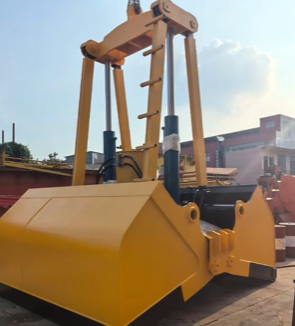
Strategies for Improving the Operational Efficiency of Port Grab Cranes
With the continuous growth of global trade and the accelerating trend of larger vessels, ports are facing increasing pressure on throughput. In the field of bulk cargo handling, port grab crane have become indispensable key equipment at terminals due to their strong adaptability and operational flexibility. However, the operational efficiency of grab crane in many ports has not yet reached an ideal level, leaving room for improvement. Effectively enhancing the operational efficiency of port grab crane has become one of the core concerns for port enterprises.
As a key node connecting ships and shore transportation, the operational efficiency of grab crane directly determines the vessel's time in port and the terminal's turnover rate. Therefore, systematically studying the factors affecting the operational efficiency of grab crane and exploring feasible paths for improvement holds significant practical importance for ports to reduce costs and increase efficiency.
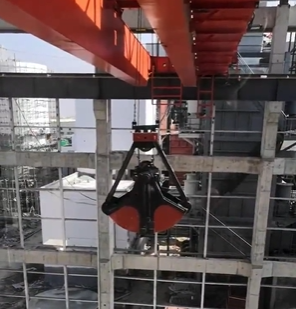
Key Factors Affecting the Operational Efficiency of Port Grab Cranes
Equipment Performance and Selection Matching
The performance parameters of the port grab crane itself are the foundation for determining operational efficiency. Indicators such as hoisting speed, grab capacity, and duty classification directly impact the single-cycle operation time. However, many terminals face issues where equipment selection does not match the cargo type, such as using small-capacity grabs for lightweight cargo, or using cranes with insufficient grab breakout force to handle compacted materials. This significantly compromises the operational efficiency of the grab crane.
Operator Skill Level
Operating a grab crane is a technically intensive task, and the operator's proficiency significantly impacts operational efficiency. Experienced drivers can precisely control the grab's landing point, reasonably time the closing of the grab, optimize the movement trajectory, and reduce movements. According to estimates, the operational efficiency difference when operating the same model of grab crane can exceed 30% between operators with different skill levels.
Production Organization and Management Mode
Loading and unloading operations involve the coordination of multiple links, including vessel scheduling, in-hold operations, and horizontal transportation. If the production organization is unreasonable, grab cranes often experience idle time waiting for vehicles or in-hold trimming, leading to losses in grab crane operational efficiency. Additionally, management factors such as shift change procedures and maintenance plans indirectly affect the equipment's effective operating time.
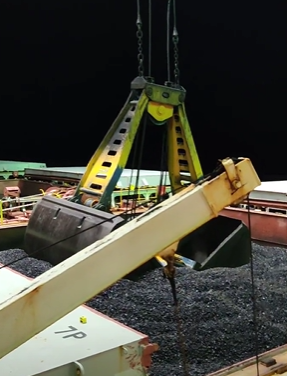
Systematic Strategies for Improving the Operational Efficiency of Port Grab Cranes
Optimizing Grab Selection and Configuration
Scientifically matching the grab type for different cargo characteristics is the primary step in enhancing grab crane operational efficiency. For heavier materials like ore, heavy-duty double-shell grabs should be selected to enhance digging force. For lightweight grains, large-capacity grabs are needed to ensure a high single-load volume. Furthermore, ports can configure multiple grabs based on changing cargo types to enable quick changes, allowing the port grab crane to maintain efficient operation under different working conditions.
Parameters such as the grab's opening size, lip shape, and deadweight also need to match the crane's performance and the material's properties. Through the optimized combination of grab and crane, the grabbing time can be significantly shortened, and the amount grabbed per cycle can be increased, thereby achieving an overall improvement in the operational efficiency of the port grab crane.
Promoting Standardized Operation Skills and Training
Establishing standardized operating procedures is an important means to reduce individual differences and stabilize the operational efficiency of grab cranes. By standardizing actions such as grab entry, hoisting, slewing, and dumping, unnecessary operation time can be reduced. Simultaneously, using simulator training combined with mentorship programs can enhance operators' predictive abilities and movement fluency.
Installing operation evaluation systems in the cab to provide real-time feedback on grab crane operational efficiency indicators helps operators adjust their techniques promptly. Regularly organizing skills competitions and experience-sharing sessions promotes the application of excellent operating methods, enabling grab crane operational efficiency to reach new heights.
Implementing Preventive Maintenance and Condition Monitoring
Equipment reliability is the guarantee of grab crane operational efficiency. Establishing a preventive maintenance system, planning maintenance based on equipment operating hours and condition, avoids unscheduled downtime caused by sudden failures. Focus should be placed on inspecting and replacing wear parts like wire ropes, sheaves, and brakes to ensure the port grab crane is always in good technical condition.
Introducing condition monitoring technology to collect real-time data on grab crane vibration, temperature, and load allows for predicting potential failures through trend analysis. This proactive maintenance model can significantly reduce unexpected downtime of the grab crane, providing equipment assurance for improving operational efficiency.
Introducing Intelligent Operation Systems
Modern sensing and control technologies have opened new avenues for improving grab crane operational efficiency. Installing laser scanners and load cells on the grab to automatically detect stockpile shape and grabbed weight assists drivers in precise operation. Some advanced terminals have already achieved semi-automatic or fully automatic operation of grab cranes, using pre-set programs to control the grab's movement trajectory, reducing human operational errors.
Intelligent dispatch systems can coordinate tasks for multiple grab cranes, dynamically adjusting operation sequences based on vessel stowage plans and vehicle arrival status to maximize equipment utilization. These intelligent means are driving a leap forward in grab crane operational efficiency.
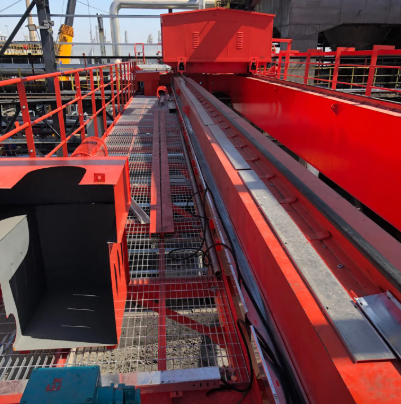
Future Outlook
With the development of new technologies like artificial intelligence and 5G communication, grab crane are evolving towards autonomous operation and remote control. In the future, operational efficiency optimization systems for grab crane based on digital twins can simulate optimal operation plans in a virtual environment and synchronize them with the physical equipment. Collaborative operations among multiple grab crane will also become more intelligent and efficient.
It is foreseeable that technological progress will continue to drive the operational efficiency of port grab crane to new levels, injecting new momentum into the high-quality development of ports. Port enterprises should keep pace with technological trends, explore feasible paths to improve grab crane operational efficiency based on their own specific conditions, and gain an advantage in the increasingly fierce port competition.
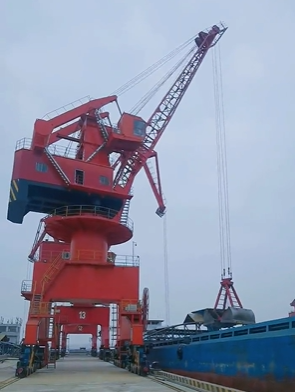
Conclusion
Improving the operational efficiency of port grab cranes is a systematic project requiring coordinated efforts in equipment, personnel, management, and technology. By scientifically selecting grabs, strengthening operator training, improving maintenance systems, and introducing intelligent methods, the potential for grab crane operational efficiency can be effectively unleashed. In the context of smart port construction, the operational efficiency of grab cranes will undoubtedly achieve new breakthroughs, providing strong support for port transformation and upgrading.