
Precise Matching, Safety and Efficiency: A Complete Guide to Truck Crane Tonnage Selection
In modern engineering construction, the truck crane has become an indispensable core equipment. Its flexibility, mobility, and wide operating range make it play a vital role in various construction scenarios. However, how to accurately match the crane tonnage according to specific working conditions to ensure construction safety and efficiency is a key technology that every engineering team must master. This process relies heavily on thorough working condition analysis.
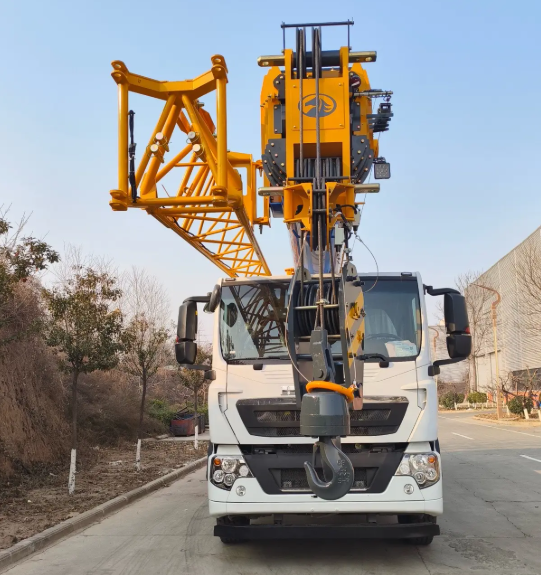
Core Considerations for Tonnage Matching
Working radius and lifting height are the primary parameters that determine the selection of truck crane tonnage. The working radius refers to the horizontal distance from the hook center to the crane's rotation center, which directly affects the actual lifting capacity of the crane. Typically, as the working radius increases, the rated lifting capacity of the crane decreases significantly. For example, a truck crane with a rated lifting capacity of 50 tons may lift 50 tons at a 10-meter radius, but only 20 tons at a 20-meter radius. This is a critical aspect of working condition analysis.
Load characteristics are equally crucial in crane selection. The weight, size, shape, and center of gravity of the actual lifting object need to be accurately calculated. Engineers must consider the additional weight of rigging and slings, and reserve at least 10%-15% safety margin. For irregularly shaped or off-center objects, a more conservative tonnage selection strategy is required, based on detailed working condition analysis.
Site conditions have a profound impact on the selection of truck crane. Complex environments such as narrow spaces, soft foundations, and slope operations not only affect the crane's positioning but may also limit the full extension of outriggers, thereby reducing the actual lifting capacity of the crane. In confined sites, working condition analysis often reveals the need for a truck crane with larger tonnage than theoretically calculated to compensate for performance degradation due to poor positioning. Every crane operation must account for these factors through rigorous working condition analysis.
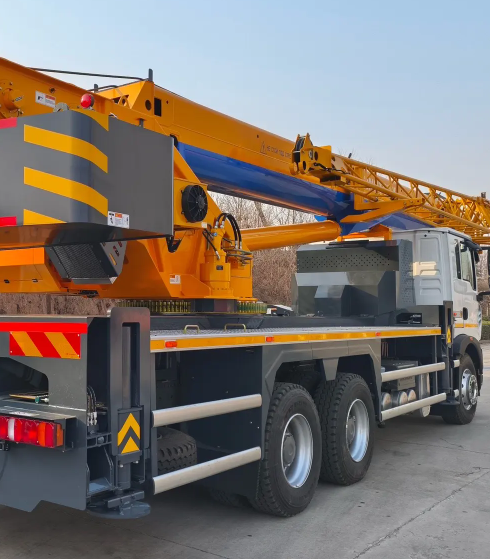
Methods and Practices for Scientific Selection
Accurate tonnage matching begins with detailed working condition analysis. This systematic assessment process includes: collecting detailed data of the lifting object, measuring on-site space dimensions, testing ground bearing capacity, evaluating environmental factors (such as wind speed, visibility), and planning the lifting path. Professional teams usually create detailed lifting plans, which include calculations of crane performance under various conditions. The truck crane chosen must align with the findings of this working condition analysis. For instance, selecting the right crane involves cross-referencing data from working condition analysis with the capabilities of the truck crane.
Modern truck cranes are generally equipped with lifting performance parameter tables and various safety devices, such as moment limiters, radius indicators, and load moment displays. Operators need to be proficient in consulting these parameter tables, understanding changes in lifting capacity under different boom length combinations and counterweight configurations. It is worth noting that cranes of the same tonnage class but different brands and models may have significant differences in actual performance, emphasizing the need for precise working condition analysis. The truck crane specifications must be verified against the working condition analysis to ensure safety.
In practice, many experienced engineers follow the principle of "choosing higher rather than lower" when selecting a crane: when the calculated tonnage is at the critical point between two cranes, priority is given to a truck crane with larger tonnage. Although this conservative strategy may increase short-term costs, it can effectively cope with unforeseen on-site variables identified during working condition analysis, ensuring overall operational safety. Thus, the truck crane tonnage should always be validated through comprehensive working condition analysis.
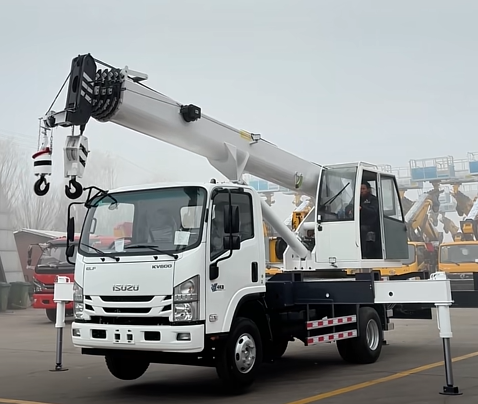
Tonnage Matching Guide for Typical Scenarios
In urban construction sites, space constraints are usually the main challenge. Lifting building materials for high-rise structures often requires medium to large tonnage truck cranes (80-300 tons), which must have good micro-motion performance and high-altitude operational stability. For example, in the construction of a 30-story high-rise building, lifting prefabricated concrete components to a height of 100 meters often requires cranes above 200 tons, even if the component's self-weight is only 10-15 tons. This decision is guided by comprehensive working condition analysis. The truck crane selected must meet the demands highlighted in the working condition analysis.
In infrastructure projects, such as bridge construction or large equipment installation, super-large tonnage truck cranes (300-800 tons) may be involved. These scenarios usually require both lifting capacity and working radius, and sometimes require multi-crane coordination. Accurate tonnage calculation must not only consider a single lift but also coordinate the efficiency and safety of the entire lifting sequence, based on ongoing working condition analysis. Each crane used, whether a truck crane or other type, must be evaluated through working condition analysis.
Emergency rescue and special operations scenarios pose unique requirements for the selection of truck cranes. In rescue environments with extremely limited space and tight time constraints, working condition analysis may indicate the need for more mobile small and medium-tonnage cranes, even if their theoretical tonnage is slightly insufficient, but rapid deployment capability may be more critical. Here, the truck crane choice is directly driven by working condition analysis, ensuring the crane fits the urgent scenario.
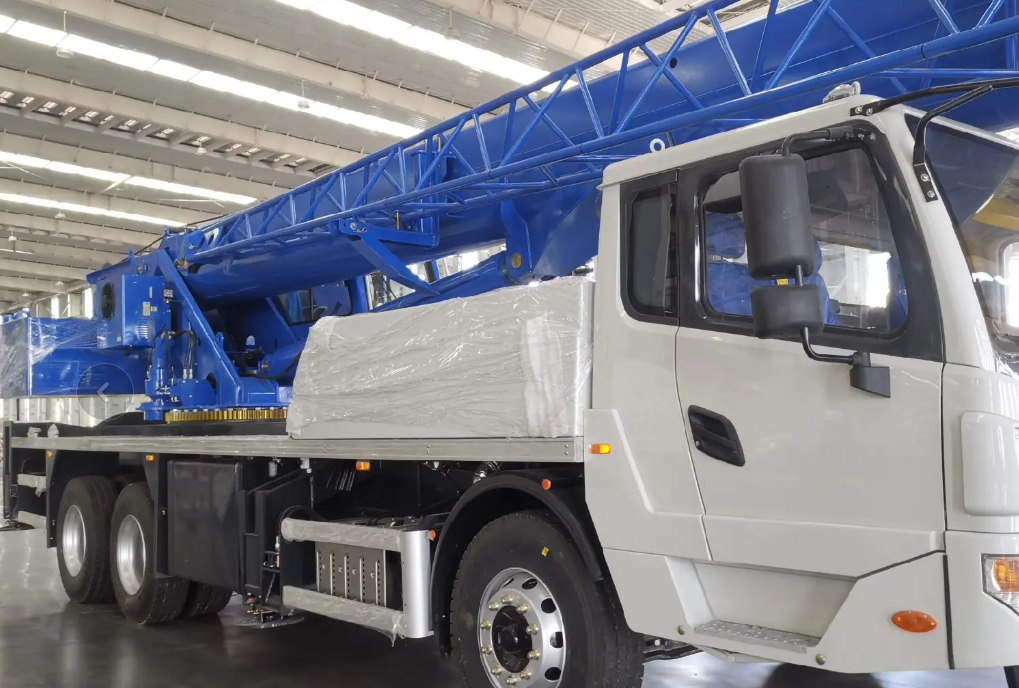
Technological Development and Future Trends
With the advancement of intelligent control technology, modern truck cranes are becoming more "intelligent". Many new models are equipped with adaptive leveling systems, automatic counterweight calculations, and 3D anti-collision systems, which greatly simplify the decision-making process for tonnage matching and enhance working condition analysis. Virtual reality technology even allows engineers to simulate the entire lifting process before operations, refining working condition analysis and identifying potential issues in advance. This benefits both the crane operator and the truck crane performance.
Environmental requirements also affect the selection of truck cranes. In emission-sensitive areas, electric or hybrid cranes are gradually becoming the first choice, although their initial cost is higher, but long-term operating costs are lower, and they can meet strict environmental standards. This factor is now a key part of working condition analysis for modern projects. The truck crane must comply with regulations assessed in the working condition analysis, and the crane technology should align with green initiatives.
Conclusion
Tonnage matching for truck cranes is a comprehensive technology that integrates engineering calculations, on-site experience, and risk management. Accurate selection can not only ensure operational safety but also improve work efficiency and reduce overall project costs. With continuous technological development, the accuracy and convenience of tonnage matching will continue to improve, but the professional judgment and rigorous attitude of engineers remain indispensable cores of this process. Central to this is thorough working condition analysis.
In this highly specialized field, every successful lifting operation begins with a deep understanding of the performance of truck cranes, a firm grasp of the working principles of cranes, and rigorous execution of working condition analysis. Only by perfectly combining theoretical calculations with on-site practice can safe and efficient lifting operations be achieved in various challenging scenarios. Thus, the truck crane, the crane as a broader category, and the working condition analysis that ties them together are all essential components of modern lifting operations. Future advancements will further integrate working condition analysis into crane systems, making the truck crane an even more precise tool for diverse applications.